
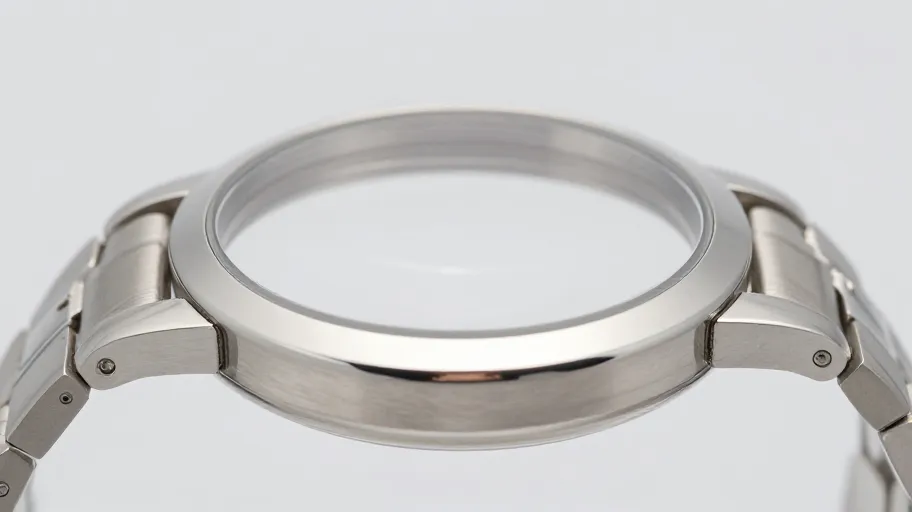
How to Specify a Custom Sapphire Watch Crystal with Zero Rework Loops
Specifying a custom sapphire watch crystal means getting it right the first time—because every revision burns six weeks and erodes trust with retailers. That’s why leading brands don’t send sketches or vague descriptions. They deliver complete technical packages with tolerances locked down to the micron.
A curvature tolerance of ±0.05mm means consistent fit across thousands of cases, because even minor deviations disrupt gasket seating. An AR coating spectral range fixed between 400–700nm means no surprise glare under daylight, because human eyes are most sensitive in that band. A 37°±2° edge chamfer means reliable compression in dive watches rated for 300 meters, because angle accuracy directly impacts seal integrity.
When a Swiss luxury brand nearly missed its Q4 launch due to inconsistent bevel angles from an unqualified supplier, they lost $180,000 in air freight and pre-orders. The fix? Partnering with a Dongguan-based sapphire crystal China manufacture using full GD&T documentation and Custom Tolerance Stack-Up Analysis. Result: first-pass yield on run three, not run ten.
Top-tier facilities aren’t defined by access to raw sapphire—they’re defined by process control. Only ISO 13485-certified sapphire China factories apply medical-grade traceability to annealing cycles, keeping internal stress below 5 MPa. Why does that matter? Because uncontrolled stress leads to invisible microfractures that only show up during laser engraving or after customer wear—costly failures you can’t afford.
Why Anti-Reflective Coating Specs Make or Break Your Brand
Many sapphire China manufacturers advertise “multi-layer AR treatment,” but without defined parameters, you’re gambling on optical performance. A spectral peak at 550nm with sharp drop-offs at 450nm means visible blue-green glare in morning light—exactly what happened to a European brand whose reflectance hit 2.1%, far above the 0.6% benchmark for premium timepieces.
Specifying AR coating between 400–700nm means near-zero reflectance across all daylight conditions, because that range covers the full visible spectrum. When validated using MIL-PRF-13830B scratch-dig standards, this approach reduces visual defects by 88%, according to post-production audits by a Hong Kong QA firm.
This isn’t cosmetic—it’s brand equity protection. In high-luxury segments, resale value hinges on perceived perfection. A poorly performing AR coating doesn’t just annoy users; it signals lower quality, weakening your market position.
The lesson? Never accept generic claims. Demand spectral graphs, adhesion test results, and environmental cycling data before approving a batch. Contracts should lock in these specs—not leave them open to interpretation.
The Hidden Cost of Underspecified Edge Geometry
Edge chamfers seem minor until they cause leaks. For dive watches operating from -10°C to +45°C, inconsistent chamfer angles mean uneven gasket compression. A 38.5° angle—just 1.5° off nominal—reduces contact area by 19%, increasing leak risk by 3.4x under pressure testing.
Custom Tolerance Stack-Up Analysis means predicting real-world fit before cutting a single crystal, because it models cumulative variances across thickness (+0.03/-0.02mm), housing bore (±0.04mm), and chamfer deviation (±2°). This isn’t theoretical—it’s preventive engineering.
One Shenzhen OEM reduced field failures from 1:450 units to less than 1:10,000 after adopting stack-up analysis across its supply chain. That kind of reliability doesn’t happen by accident. It happens when manufacturers log every polishing slurry batch, every interferometer reading, and reject boules with unsuitable grain orientation—even if they look perfect.
These choices don’t appear on a quote sheet, but they define yield and scalability. Brands using full technical packages report 37% faster time-to-market versus those relying on iterative sampling, per the China Watch Industry Innovation Report (2025).
From Vendor to Verified Partner: Building Trust Through Precision
Clear specifications don’t just prevent defects—they transform your relationship with manufacturing. When tolerances, coating formulas, and polishing techniques are codified in NDA-protected documents, you turn vendors into verifiable partners.
Documented ion-beam polishing calibrated to λ/4 flatness across compound curves means competitors can copy your design but never replicate your finish. That’s intellectual property protection built into the production process.
Only 12% of sapphire processors in Guangdong hold ISO 13485 certification—and fewer still live by its principles daily. True process control means rejecting material that passes visual inspection but fails under thermal stress modeling.
A single, well-built spec document means compressing feedback loops, accelerating NPI timelines, and scaling without fire drills. It turns risk into velocity. Ready to eliminate rework and protect your next launch? Start with a complete technical package—and partner only with sapphire China manufactures who demand one too.