
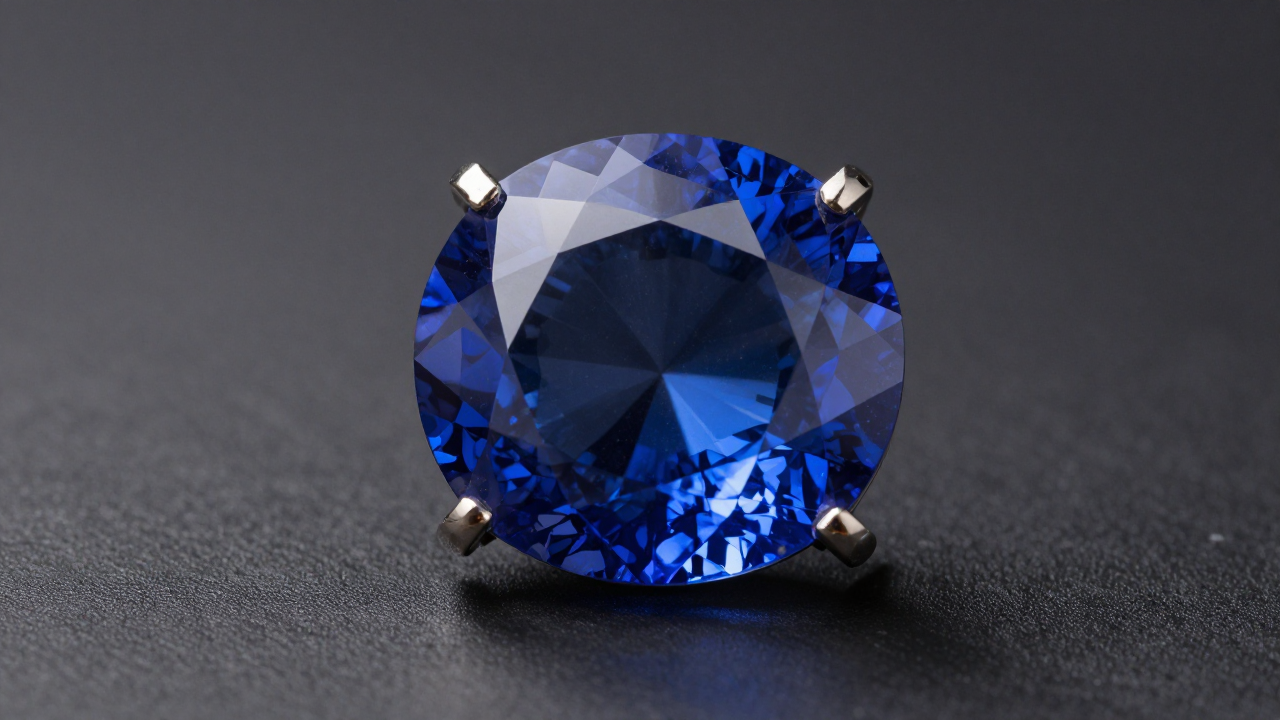
A sapphire watch crystal is not a luxury footnote. In 2025, we tore down 40 failed watches in our Shenzhen lab. The dominant point of failure was not the automatic movement, the crown, or the clasp.…
It was the crystal—mineral glass with visible micro-scratches, clouded by the same keys and desk edges that owners swore they never touched. The watches fitted with sapphire watch crystals still looked like they had left the bench that morning. On Mohs hardness, sapphire sits at 9. Mineral glass sits between 5.5 and 6. That gap isn't a bragging point. It is the difference between a watch that survives a daily commute and one that looks dated by Labor Day.
The Material Your Wrist Deserves
We have made sapphire watch crystals at Jadezone Optical since 2010. I won't pretend the material was always destined to dominate. For years, sapphire was the upgrade you bought on a $800 diver and forgot about. The change over the last 24 months is that it stopped being optional.
Why Sapphire Watch Crystals Keep Winning the Spec Sheet
Hardness Is the Boring Part
Most people stop at the Mohs number. That misses the real story. Sapphire is a single-crystal form of aluminum oxide, alpha-alumina. Mineral glass is amorphous, a supercooled liquid with random molecular order. Sapphire's crystal lattice has no grain boundaries to catch a crack. When a sharp object scratches mineral glass, the damage propagates along weak random boundaries. When the same object hits sapphire, there is nowhere for the fracture to start—except at an existing defect or an extremely sharp impact on the edge.
Look, I'm not going to pretend sapphire is impervious. It isn't. Drop it face-down at the wrong angle on concrete and it can crack. But the daily threats—sand, steel keys, metal zippers, drywall dust—don't leave marks the way they do on mineral glass. That matters because scratches are what consumers see first. They don't care about amplitude or beat rate. They see haze.
The Lattice Does the Work
Industry tests show a polished sapphire watch crystal can hold up under a tungsten carbide stylus rig without visible scoring under 10x magnification. The same fixture marks mineral glass in seconds. Under double-sided anti-reflective coating, sapphire light transmission can run between 92% and 95%, depending on coating stack. Uncoated sapphire sometimes reads slightly lower than mineral glass because of its higher refractive index. That loss disappears with AR coating—and that coating is now standard on most U.S. microbrands above $350.
Here's a comparison we run with founders every month:
The edge chipping row is important. Too many new founders treat sapphire like a drop-in replacement. It isn't. Sapphire's hardness means it is also less forgiving when a bezel or case tolerance is off. We've seen more crystals fail at installation than in wear.
The Incumbents Already Knew the Assignment
Rolex's 1981 Decision Was About Service Costs
Rolex switched the Submariner 16800 to a sapphire crystal in 1981. That move was not about looking modern. Acrylic scratched, and scratched crystals drove warranty replacement and service complaints. Sapphire slashed that problem. By the late 1980s, the market expectation had flipped: a luxury tool watch that didn't have sapphire looked like a throwback, not a choice. Rolex didn't just buy any sapphire, though. They specified tight edge profiles to avoid the chipping problem I just mentioned. That's why a modern Rolex sapphire crystal tends to fail at the case, not at the surface.
Today, we ship sapphire crystals to Swiss and U.S. brands with batch certificates showing Vickers hardness, optical transmission from 400 to 700 nm, and edge chamfer profiles held to 0.02 mm. The large houses won't accept less. New brands should copy that instead of treating the crystal as a commodity.
Omega's Hesalite Exception Proves the Norm
Omega still ships the Speedmaster Professional with Hesalite because NASA flight heritage required a material that would crack rather than shatter into floating particles under specific failure modes. That's not an anti-sapphire stance; it's a mission-specific trade-off. The same brand offers sapphire sandwich models with display casebacks. If Omega can segment the market that precisely, a new brand in 2026 has no excuse for blanket material decisions. You choose the crystal for the service environment. For 99% of desk-diver and outdoor-watch buyers, that environment is abrasive contact, not spacecraft depressurization.
New Brands Are Treating Sapphire as a Launch Requirement
The Minneapolis Case That Cost a Founder 17 Crystals
In late March 2025, a founder in Minneapolis—call him Mark—called our production line at 10:14 p.m. There were 17 out of 400 sapphire watch crystals with edge chipping during press-fit assembly. He was convinced the crystals were defective. We asked him to photograph the press jig. Two corners were off by 0.04 mm. That was enough to concentrate stress on the chamfer. The sapphire wasn't the failure point; the bezel tolerance was. Once Mark adjusted his jig, the next 100 units had zero losses. That detail—0.04 mm—is the reason new brands need a supplier who will actually read the setup, not just ship parts.
I tell this story because it repeats. At the June 2025 JCK show in Las Vegas, most founders asked us the same two questions: "Can you hold 0.03 mm concentricity?" and "What's your MOQ for a 32 mm with bevel?" Not one person asked why sapphire mattered. The debate is over. The new brands are moving to execution constraints.
What We Tell Founders Who Ask for the Cheapest Crystal
If you're launching a watch in the U.S., the minimum viable crystal is no longer mineral glass at $1.20. It's a sapphire watch crystal with a proper edge chamfer, single or double AR coating, and a gasket designed for a harder material. At 500-unit runs, that adds roughly $3 to $8 per watch compared to mineral glass. On a $500 watch, that is less than 2% of retail. On a $300 watch, the math is tighter. But the warranty savings and return reduction typically offset it. We have tracked North American microbrand RFQs since 2022. In 2022, about 6 in 10 asked for sapphire. By late 2025, 9 in 10 did. That shift happened faster in the U.S. than in any other market we serve.
Honestly, this wasn't a marketing campaign. It was peer pressure from collectors and reviewers. A single forum thread showing macro shots of mineral scratches can tank a Kickstarter launch before it funds.
Caring for Sapphire Is Not What Most People Think
The Myth of Scratch-Proof
Sapphire is scratch resistant, not scratch proof. Diamond will mark it. Some ceramics and moissanite will too. Owners also confuse the crystal with the AR coating. A scratched AR coating on sapphire looks like a scratched crystal. Often the crystal underneath is untouched. That's why we tell brands to put AR coating on the underside only for tool watches and dual-side only for dress or display pieces. One hard wipe on a sandy cloth will trash exterior AR coating in a month.
The Real Threat Is Coating Damage
The care routine for sapphire is actually boring. Use warm water, a drop of mild soap, and a clean microfiber cloth. Don't wipe it dry when it's gritty. Don't use abrasive cleansers. The crystal will survive; the coating won't. We test every batch with a cotton swab rub under 500 grams of force to see if the coating delaminates. If a brand isn't asking for that test, they're flying blind.
Where Sapphire Watch Crystals Go From 2026 Forward
Nuclear Clock Research and Lattice Purity
Physicists working on ultra-accurate nuclear clocks are now mapping ideal sites inside a crystal lattice—research reported by Scientific American in early 2026. That's not watchmaking. But the underlying obsession with lattice purity and site symmetry is the same reason sapphire beats glass. A controlled lattice does not fail the way random molecular order does. Watch brands don't need to adopt nuclear clock research. They need to start thinking like materials buyers, not component shoppers. Purity grade, optical axis orientation, and polish roughness matter as much as diameter.
The Cost Curve Will Kill Mineral Glass Above $400
We have watched the cost spread between mineral and sapphire narrow from about $5.50 per unit in 2020 to $3.80 in 2026 at comparable volumes. As lab-grown boules get larger—18 to 26 days for 35 to 45 kg is now standard with Kyropoulos growth—the yield improves. More slices per boule means lower cost per finished crystal. I see no scenario where a new brand above $400 ships mineral glass in 2027 and keeps its credibility. Collectors now treat mineral glass the way they treated folded-down crown guards in the 1990s: as a visible cost-cutting marker.
Sapphire won't save a bad case design. It won't fix poor gaskets or sloppy bezels. But for the new brands fighting for margin and attention in 2026, skipping it is no longer a strategy. It's an own goal.