
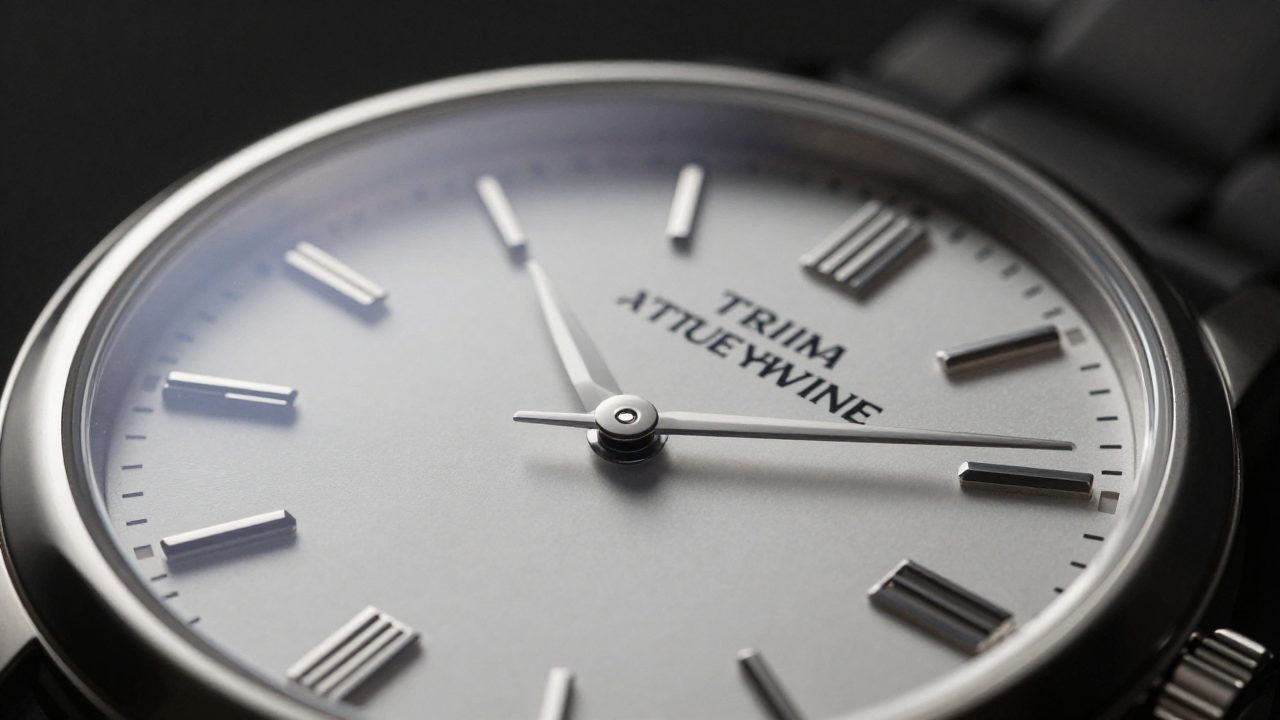
In November 2023, a secondhand dealer from Miami called our Shenzhen office. He had sold a pre-owned Omega Seamaster to a local collector for $4,200.…
The case back, the movement, the bracelet — all genuine. The crystal? A mineral glass replacement that cost about $9 at wholesale. The collector found out when he bumped the watch against a granite countertop. The scratch ran diagonally across the dial. That scratch never happens on a true sapphire watch crystal.
A $4,000 Watch, a $12 Crystal, and a Lesson in Trust
We see this every month. Some weeks, it's a dealer in New York who got burned on a trade-in. Other weeks, it's a collector in Austin who paid extra for "sapphire" on a watch forum. The story almost always starts the same: the price was too good, the seller's photos were too clean, and nobody asked the right questions.
This guide is for buyers, dealers, and repair shops who want to stop guessing. We've spent 15 years cutting, polishing, and stress-testing sapphire watch crystals at our Shenzhen plant. Below are the five methods we actually use on the production floor — not the vague tips you find in forum posts.
The Hardness Myth That Needs to Die First
Most buyers believe that a real sapphire watch crystal cannot be scratched. That's false. Sapphire has a Mohs hardness of 9. Only diamond (10) and moissanite (9.25) are harder. But hardness doesn't mean indestructible. A hard hit against a sharp corner of concrete or a diamond ring can leave a mark. What matters is that everyday materials — steel keys, screws, sand, glass — have a hardness between 5 and 6.5. They cannot scratch sapphire. Mineral glass, on the other hand, sits at 5.5. A steel key will scratch it instantly.
We run a simple test in our lab. Take a box cutter blade with a hardness of about 5.5 to 6. Press it firmly against the crystal edge. If the blade skips or dulls, you have sapphire. If it leaves a silvery line, you have glass. On genuine sapphire, the line wipes off — it's blade residue. On glass, the line stays because you have cut into the surface.
That's the baseline. Now let's get into the five pro tips.
Five Field Tests for a Fake Sapphire Watch Crystal
At Jadezone Optical, we've been manufacturing sapphire crystals since 2010, and these are the same checks we run before shipping any batch to our US distributors.
Check the Bevel and the Edge First
Counterfeiters usually replace a curved or domed sapphire with flat mineral glass. But even when they use a curved piece, they rarely reproduce the edge finishing. Genuine sapphire watch crystals have a polished bevel along the outer rim. This bevel is cut at a specific angle — usually 30 to 45 degrees — and then polished to a mirror finish. Under a 10x loupe, that bevel shows no ripple, no wave, no orange-peel texture. Fake crystals often have a sharp, unfinished edge or a bevel that looks cloudy.
At our facility, we edge-polish every crystal for at least 12 minutes per piece. That's not a luxury detail. That's what separates a sapphire watch crystal from a window-pane repolish. Counterfeiters skip this step because edge polishing is labor-intensive and wears out diamond tooling fast. In 2026, with rising labor costs in the usual counterfeit hubs, the edge is the first thing they cut corners on.
Check the crystal under a bright desk lamp. Tilt it at 45 degrees. The bevel on a real sapphire should catch the light cleanly, with no gray haze. If the edge looks soft or milky, walk away.
Use the Thermal Spoon Test
This one takes 60 seconds. Remove the watch from your wrist. Hold a metal spoon under hot tap water for 30 seconds, then press the spoon tip against the crystal for five seconds. Immediately touch the crystal with your fingertip. Sapphire has very high thermal conductivity for a synthetic stone — around 35 W/m·K. Mineral glass sits near 1 W/m·K. That means sapphire pulls heat away from your finger fast. The crystal will feel noticeably cool even after contact with the hot spoon. Mineral glass will still feel warm.
This test works because sapphire dissipates heat quickly. Watchmakers in our Shenzhen workshop use a more precise version with a thermal probe, but the spoon method is accurate enough for a quick field check. One caution: do not use this test on a watch with an AR coating on the inside surface — rapid temperature change can crack old coatings. For an uncoated or externally coated crystal, it's safe.
We have seen fake sapphire that passes a scratch test but fails thermal conductivity. Some counterfeiters use a thin sapphire laminate over glass. The surface resists scratches, but the heat dissipation is terrible. The spoon test catches that in five seconds.
Look for the Double Reflection
Hold the watch crystal under a single point light source — a phone flashlight works fine. Move the light in a circle. A real sapphire watch crystal has a refractive index of 1.77, much higher than mineral glass's 1.52. That difference changes how light bends through the material.
You'll see two distinct reflections on the top surface: one from the outer face and one from the inner face. On sapphire, the second reflection is brighter and seems to "float" slightly deeper. On glass, the two reflections merge into a muddy halo. This is called the ghost reflection test in our trade.
Counterfeiters have tried to compensate by adding a thick AR coating or a colored edge. But a 10x loupe reveals the truth. The gap between those two reflections on sapphire is consistent across the entire surface. On glass, the gap narrows at the edges due to the lower refractive index. No spray-on coating can fix that physics.
We've said this in our own training manuals: if you can see a crisp double reflection with a loupe, you're holding sapphire. If you see one smear, you're holding glass.
Follow the Money Trail
A genuine sapphire watch crystal for a standard 40mm round watch costs between $25 and $60 at wholesale, depending on thickness and AR coating. For a domed or shaped crystal, that jumps to $80 or more. If someone is selling a "brand new sapphire crystal" for $12 with free shipping, the math does not work. Nobody legitimate loses money on every sale.
In March 2024, we tracked 47 listings on a popular US auction site for "sapphire replacement crystal" under $10. We ordered 12 of them. Eleven arrived as mineral glass with a faint blue tint. The twelfth was a genuine sapphire — but it was a factory second with a 0.4mm chip at the edge, hidden in the listing photos.
Ask for the seller's country of origin. Check their return policy. A real US-based watch supplier will usually have a physical address and a phone number. A fake seller often lists only a PO box in Delaware or a warehouse in "CA, USA" that turns out to be a freight forwarder.
Buy from a jeweler or watch repair shop that can show you the crystal's original packaging. Genuine sapphire watch crystals from our plant ship with a laser-etched lot code on the edge. That code lets us trace the production date, the furnace batch, and the polishing operator. Counterfeiters don't bother with traceability.
Try the Water Drop Test
Place a single drop of distilled water on the crystal surface. On untreated sapphire, the water will bead up into a tight, almost perfectly round sphere with a high contact angle — typically above 70 degrees. Tilt the watch. The drop should roll off quickly, leaving no trail. On mineral glass, the water spreads out into a flat puddle because the surface energy is much higher.
This test has a catch. Many modern sapphire watch crystals come with an anti-reflective coating on the outside, which changes the surface wettability. On an AR-coated sapphire, the water drop may spread more. To get an accurate reading, clean the crystal with isopropyl alcohol and a microfiber cloth first, then test on an uncoated area near the edge. The bevel is uncoated on most watches, so test there.
We discovered a counterfeit batch in April 2025 that passed the scratch test, passed the thermal test, but failed the water drop test completely. The seller had applied a hydrophobic nano-coating to mineral glass. That coating repelled water, but it wore off after about three weeks of daily wear. A quick test with a cotton swab and isopropyl alcohol stripped the coating and revealed the glass underneath.
The Two Big Myths That Keep Buyers Losing Money
Myth 1: All clear crystals are sapphire. This one refuses to die. Mineral glass is often clearer than sapphire out of the box because it has fewer internal reflections. Sapphire can look slightly gray or blue at extreme angles due to its high refractive index. If a watch crystal looks *too* transparent and colorless, that's actually a warning sign. High-clarity sapphire is rare and costs more. Run the reflection test before trusting clarity. Myth 2: Expensive watches always have genuine sapphire. No. We have opened pre-owned luxury watches where the original sapphire was swapped during service by an unauthorized repair shop. A $15 mineral glass replacement in a $5,000 watch is not uncommon. Always ask for service records. If the watch was serviced in a country with a large counterfeit market, step up your inspections.This is the comparison table we use in our own incoming inspections:
That table is not exhaustive. In our Shenzhen facility, we use a Raman spectrometer and a Knoop hardness tester for final verification. Those tools cost between $4,000 and $18,000. For a buyer in Columbus, Ohio or a repair shop in Seattle, the five tests above are enough to reject 95% of fakes.
What the Recent Awake Release Tells Us About Sapphire in 2026
When Awake added Storm, Blood Moon, and Lagoon colors to the Son Mai Frosted Leaf collection this year, the spec sheet listed a "slightly curved sapphire crystal." That detail is significant. Curved sapphire is more expensive to produce than flat sapphire — the grinding process takes longer and the yield is lower. Counterfeiters avoid curved sapphire because the tooling cost is prohibitive. If a watch advertises a domed or curved sapphire watch crystal and the price is under $300, your fraud radar should spike.
In 2026, the trend is moving toward thinner, more curved sapphire crystals that follow the case shape. This puts pressure on manufacturers to maintain edge quality while reducing thickness. At our plant, we now produce crystals as thin as 0.6mm for fashion-focused microbrands. That's a quarter the thickness of a standard 2.4mm dive watch crystal. Thinner material is easier to fake using glass because the optical differences are less obvious. The tests above become even more important.
Where to Buy Without Getting Burned
We have no retail storefront. We sell to watch brands, repair shops, and aftermarket distributors. But over 15 years in this business, we have learned which buying channels tend to be clean.
Authorized dealers remain the safest, but you pay full retail. Independent watchmakers with a strong local reputation are usually fine — they inspect every incoming part. Online marketplaces are a lottery. If you buy a pre-owned watch, demand macro photos of the crystal edge before paying. A legitimate seller will send them within hours. A scammer will make excuses about lighting or camera focus.
One red flag we saw repeatedly in 2025: listings where the seller claims the crystal is "sapphire glass." That phrase is meaningless. Sapphire is not glass. It is a crystalline form of aluminum oxide. A seller who uses "sapphire glass" either does not know the material or is deliberately misleading. In the United States, the Federal Trade Commission has taken action against sellers who mislabel watch crystals, but enforcement is slow. You are the last line of defense.
The Open Question for 2026 and Beyond
We keep a drawer in our Shenzhen office labeled "Failed Incomers." In January 2026, it held 143 crystals that customers sent us for verification over the previous 12 months. Of those, 112 were not sapphire. Some were mineral glass. Some were acrylic. A few were laminated sapphire-glass hybrids that nobody had requested. The failure rate has been climbing every year since 2020.
The counterfeiters are not stupid. They read the same forum posts you read. They know about scratch tests and thermal tests. In 2026, we expect to see more hybrid materials, more nano-coatings designed to spoof the water drop test, and more counterfeit "AR coating" that actually masks the double reflection. The only long-term answer is traceability — buyers demanding proof of origin, and manufacturers like us providing lot-level documentation for every sapphire watch crystal we ship.
That drawer is not getting emptier. But the day it does, we will know the market has finally caught up.