
The hidden cost of sloppy BOMs
Incomplete Bill of Materials (BOM) documents mean rejected batches and delayed launches because factories guess at specs instead of following them. One U.S. watchmaker lost 40% of its first production run due to uncontrolled coating thickness—costing over $220,000 in rework and delays. That failure wasn’t caused by poor equipment; it was caused by a BOM that skipped critical tolerances for surface activation and layer sequencing.
When a BOM lacks exact parameters, it creates interpretation gaps across engineering, procurement, and manufacturing teams. A deviation of just ±5nm in SiO₂ thickness can shift light reflectance enough to create visible glare under store lighting. But with full technical documentation, those deviations are caught before deposition starts. Clear specs mean fewer defects, faster approvals, and consistent optical performance across global supply chains.
Drawing BOMs turn parts lists into precision tools
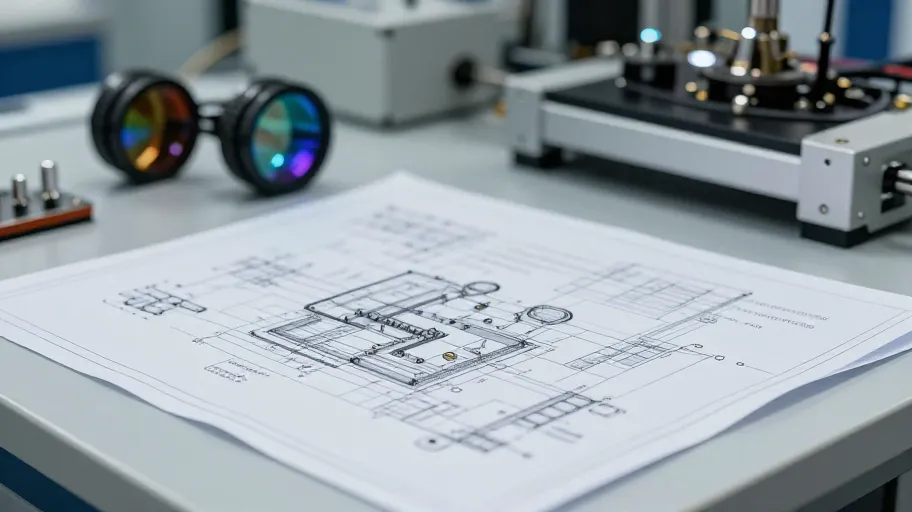
A Drawing BOM links every component to engineering drawings, material certifications, and process annotations—so “sapphire substrate” becomes “C-plane oriented sapphire, Ra ≤ 0.3 nm, plasma-treated for 90 seconds.” This level of detail means machines can validate compliance automatically during production. One European eyewear brand reduced coating delamination by 76% within three months just by enforcing Drawing BOM standards.
This precision means faster first-article inspections because auditors aren’t chasing missing data—they’re verifying alignment. It also enables statistical process control (SPC) systems to adjust deposition rates in real time based on incoming substrate quality. For buyers, that translates to predictable yields and fewer surprises at final QC.
Approval Notes lock in engineering intent
Verbal instructions or vague notes like “ensure good adhesion” lead to inconsistent results, especially across language barriers. Approval Notes fix this by capturing exact setup procedures—such as “verify ion beam alignment at 15° incidence before TiO₂ layer initiation using ellipsometry feedback.” These version-controlled, hand-signed records act as technical anchors between design and execution.
Factories using structured Approval Notes achieve 92% first-time pass rates on multi-layer AR stacks, compared to 54% in facilities relying on abbreviated digital work orders. That reliability means less scrap, lower labor costs, and tighter batch-to-batch consistency—all critical for premium optics where clarity defines brand trust.
China's top sapphire factories now demand documentation up front
The best Chinese sapphire manufacturers no longer accept purchase orders without complete Drawing BOMs and validated Approval Notes. They treat these documents not as formalities but as live inputs to their production systems. Real-time adjustments to vacuum deposition are made based on lot-specific substrate data pulled directly from the BOM.
This shift means optical clarity isn’t left to chance—it’s engineered into every crystal. For Western brands, partnering with these documentation-ready suppliers cuts time-to-market by up to 30%, reduces rework costs significantly, and ensures retail-ready performance across all units. In high-stakes markets like luxury watches and AR/VR lenses, that predictability is the difference between scaling successfully and facing costly recalls.
Stop treating BOMs like shopping lists
If you're still using BOMs as procurement checklists, you're risking product quality and launch timelines. Upgrading to a Drawing BOM + Approval Note system means your manufacturing partners execute exactly what you designed—no assumptions, no misinterpretations. That technical rigor delivers quantifiable benefits: faster approvals, higher yields, and guaranteed optical performance.
One Tier 1 electronics OEM found that requiring full documentation cut first-article review cycles by nearly half. For any brand sourcing sapphire AR coatings from China, the message is clear: precision starts with paper. Get the docs right, and the rest follows.