
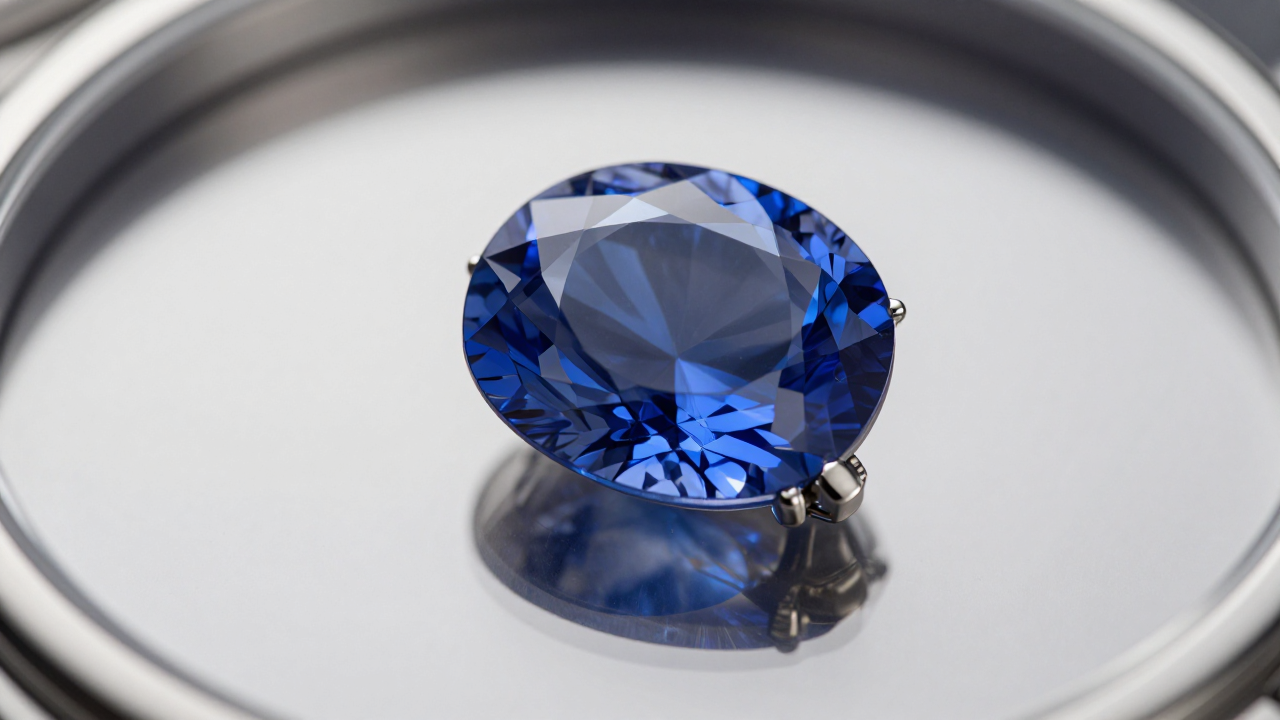
A sapphire watch crystal costs $200 to $400 installed, and payback typically lands in 2 to 3 years for owners who replace mineral glass every 12 to 18 months.…
Everyone else breaks even closer to year six. The $500-plus savings claim holds, but only inside a fairly narrow set of conditions.
What a Sapphire Watch Crystal Costs, Up Front and Later
A sapphire watch crystal runs $200-$400 installed on a mid-range watch. Add $60-$140 over three years for gasket service, pressure testing, and two-way insured shipping. Mineral glass costs $25-$60 per replacement but usually fails every 14 to 18 months under daily wear.
Here's how the two stack up on a $900 field watch serviced at an authorized center:
The surprise is never the crystal. It's the invoice that arrives with it. In April 2023 a Los Angeles service center sent one of our distributor's customers a $412 bill: $58 for the crystal, $85 for gasket and pressure test, $210 in bench labor, $59 for insured shipping both ways. The customer had budgeted $60. That gap is where most sapphire ROI models fall apart.
The Hidden Line Items Most Owners Never Budget
Downtime is the one nobody prices. Three weeks without your daily wearer usually means buying a second watch, and a $120 beater bought to cover a $58 repair is a real cost that never shows up in the comparison.
Then there's the "while we're in there" escalation. Any crystal swap requires opening the case, which means the technician inspects the movement, the crown threads, and the caseback gasket. A magnetized movement or a perished gasket gets fixed on the spot. It applies to sapphire too, but it happens once instead of every 18 months.
Finally, sapphire chips. It doesn't scratch, it breaks. That inverts the cost profile from a cheap recurring expense into a rare expensive one, which matters a lot if you work with your hands.
How to Calculate Payback on a Sapphire Watch Crystal
Payback period equals the sapphire upgrade premium divided by your annual mineral-glass cost. If mineral service costs $250 per event and happens every 18 months, that's $167 a year, and a $340 sapphire upgrade pays for itself in just over two years.
Payback in years = Sapphire Upgrade Premium ÷ Annual Mineral-Glass Cost Annual Mineral-Glass Cost = (Crystal + Install + Polishing + Shipping + Downtime Value) × Annual Replacement RateRun it with real numbers:
So the $500 figure is real, but it lands around year five to six, not year one. Anyone promising it faster is quoting the crystal price and ignoring the bench labor, which is 60-75% of a typical service invoice.
Now the same formula on a $300 watch. Mineral replacement is $35 to $60, often done yourself, replaced every 30 months. That's $14 a year. A $260 sapphire upgrade takes 18.6 years to break even. Nobody keeps a $300 watch that long.
Where People Get the Math Wrong
Most sapphire ROI estimates fail on the same four inputs, and the first one alone can swing the answer by 40% or more.
They count parts, not labor. A flat sapphire blank costs us $8-$15 at volume in 1.2mm thickness. The customer pays $240-$400. Between those two numbers sit grinding, lapping, polishing, inner anti-reflective coating, edge beveling, and a technician's bench time. Quoting the blank price as "the cost of sapphire" is the single most common error we see in buyer emails. They assume sapphire is unbreakable. Sapphire measures roughly 2,000-2,300 on the Vickers hardness scale against 550-700 for mineral glass. Hardness resists abrasion, not impact. If you ride mountain trails or swing a hammer, a shattered sapphire costs the full $300-plus to replace, while a scuffed mineral crystal polishes out for $20 with cerium oxide. They buy "sapphire" that isn't. In February 2024 a US distributor returned a 200-piece lot to us after customer complaints. Thirty-one pieces tested under 700 HV on a Presidium thermal tester, meaning they were mineral glass with a sapphire-hardness coating sold under a sapphire label. If you're comparing quotes and one is dramatically cheaper, test it. They ignore geometry. A flat crystal and a double-domed crystal with inner AR coating are not the same purchase. Our own quote sheets put flat blanks at $8-$15 and double-domed, inner-coated pieces at $35-$60 before installation. If your watch has a domed crystal, the upgrade price can double. Outer AR coating is worse still — it wears off in two to three years and looks like scratching.What the 2014 GT Advanced Bankruptcy Teaches About Sapphire Economics
Sapphire is cheap at small area and brutally expensive at large area. GT Advanced Technologies learned this in public: after Apple prepaid $578 million in 2013 for iPhone display sapphire from a Mesa, Arizona plant, GT filed Chapter 11 on October 6, 2014, having never reached viable yields.
Watch crystals sit in the sweet spot of that curve. A 32mm crystal covers roughly 6 to 10 square centimeters; a phone screen covers about 80. Yield loss and polishing time both scale with area, which is why sapphire survived in camera lens covers and watch faces but never made it into mainstream phone glass.
We've been cutting sapphire in Shenzhen since 2010 with 300-plus staff, most of them on the grinding and polishing lines, and the pattern shows up in our own cost sheets: geometry and coating drive 70-80% of finished crystal cost, not the raw corundum. That's also why sapphire has drifted downmarket. Citizen's 2025 titanium radio-controlled chronographs ship with sapphire, 89 grams, 10 ATM water resistance. When sapphire is standard equipment at that tier, paying a $340 premium to add it to a watch that already has it is just lost money.
When a Sapphire Watch Crystal Is Not Worth Buying
Skip the upgrade if your watch is worth under $150, if you flip watches every two or three years, or if your work puts the crystal in the path of impacts rather than abrasion. In those cases payback exceeds the ownership period and the financial argument disappears entirely.
The specific boundary conditions we'd flag:
Acrylic deserves a mention here. It scratches constantly but polishes back to clear in about ten minutes with cerium oxide, which makes it the cheapest long-run option for anyone willing to do the work. Seiko's Hardlex sits between acrylic and sapphire on both price and durability, and on a $200 diver it's usually the right answer.
The honest version: sapphire wins on total cost of ownership above roughly the $600 mark, for owners who keep watches and actually wear them. Below that, you're buying the feeling of not thinking about your crystal, which is a legitimate reason — just not a financial one.
Frequently Asked Questions
How much does a sapphire watch crystal cost?
A sapphire watch crystal costs $200-$400 installed, depending on dome geometry and whether the case must be opened and resealed. The raw blank is only $8-$60 of that total; grinding, anti-reflective coating, bench labor, and pressure testing make up the rest.
How long does a sapphire watch crystal last?
Indefinitely under normal wear. Sapphire measures roughly 2,000-2,300 on the Vickers scale, so keys, desks, and sand won't scratch it. Impact is the limit: a hard strike can chip or shatter it, and replacement then costs the full sapphire price again.
Is a sapphire crystal worth it on a $300 watch?
Usually not. On a $300 watch, mineral replacement runs $35-$60, so a $260 sapphire upgrade takes 9 to 15 years to pay back. Sapphire makes financial sense above roughly $600, where authorized-center crystal service gets expensive.
Can a chipped sapphire crystal be repaired?
No. Sapphire cannot be polished or filled the way acrylic and mineral glass can, so a chip means full replacement. That asymmetry is the main risk in the ROI model — you trade a cheap recurring cost for a rare expensive one.
What is the difference between sapphire and sapphire-coated crystal?
Sapphire-coated means a mineral glass blank with a thin sapphire-hardness layer bonded on top. It scratches more like mineral glass once that layer wears through, and it typically tests under 700 HV, far below solid sapphire's 2,000-plus.