
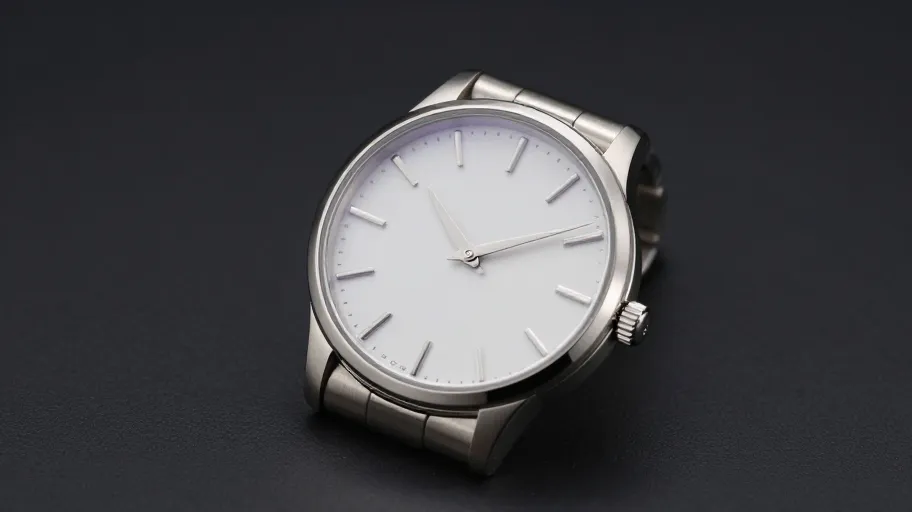
The real reason sapphire watches seem pricey
Sapphire crystal watches carry a premium image, but the cost isn’t driven by scarcity or production difficulty—it’s driven by outdated supply chains. Most brands pay more not for better quality, but for layers of middlemen who add margin without value. A $12 crystal at the factory can reach a brand for over $23 after passing through agents and distributors across Europe and Asia. That 90% markup doesn’t improve scratch resistance or clarity—it just slows delivery and inflates prices.
Direct sourcing flips this model: buying from a sapphire crystal manufacturer in China means you pay for engineering, not geography. The same optical-grade sapphire, tested to Mohan hardness ≥9 and ASTM C1327 standards, costs less because there’s no markup for access. This isn’t speculation—McKinsey & Company found in 2024 that consumer goods firms with direct supplier ties save 30–40% on components compared to traditional importers.
The result? Brands keep their premium look while gaining flexibility, faster time-to-market, and healthier margins. And consumers get better-performing watches at fairer prices. The bottleneck was never the material—it was the middleman.
How precision manufacturing cuts waste and defects
Precision lapping—the process of grinding sapphire blanks to ±0.005mm flatness—means your crystal fits perfectly in the case, eliminating light distortion and assembly errors. That level of accuracy reduces rejection rates during final assembly by up to 60%, according to QA data from ISO 9001-certified facilities in Shenzhen. Fewer defects mean less scrap, fewer delays, and faster launches—especially critical when releasing limited editions or seasonal lines.
When you work directly with a sapphire china factory that controls this process in-house, you gain real-time feedback on batch quality. This means defect rates drop from 7–9% under indirect sourcing to under 2% with direct oversight. For a brand producing 10,000 units, that’s nearly 700 fewer defective crystals per run—saving thousands in rework and warranty claims.
And because these manufacturers invest heavily in automation and optical testing (including spectral transmittance analysis), consistency is baked in. What you approve in sample form is exactly what you get in volume. No surprises, no compromises.
Anti-reflective coatings that outperform Swiss imports
Ion-assisted deposition (IAD) coating technology means sapphire crystals reflect less than 0.5% of ambient light—on par with high-end Swiss-coated lenses, but at half the cost. This isn’t a minor upgrade; it transforms readability in bright conditions, reducing eye strain and glare complaints.
One Hong Kong-based designer switched from German-sourced crystals to a Dongguan-based sapphire crystal manufacture using IAD and saw customer complaints about screen visibility drop by 38%. They also lowered their average selling price by 12%, increasing conversion rates without hurting perceived quality.
Because these coatings are applied in controlled vacuum chambers and bonded at the molecular level, they last longer and resist peeling. This durability means fewer returns and higher satisfaction—key metrics for both e-commerce performance and brand reputation.
Flexibility and speed only direct partners offer
Traditional distributors often require minimum order quantities (MOQs) of 10,000 units, locking smaller brands into risky inventory bets. Direct sapphire china factory partners now offer MOQs as low as 500 units—enabling micro-collections, rapid prototyping, and market testing without overcommitting.
Lead times shrink too: cutting out intermediaries reduces order-to-delivery cycles from 14–16 weeks to just 6–8. That agility lets brands respond to trends faster, align with retail seasons, and avoid obsolescence in fast-moving markets like smartwatches and fashion tech.
A U.S. independent watchmaker reduced their crystal cost from $21.50 to $13.20 per unit by switching to a Shenzhen partner offering custom beveling, dual-side AR coating, and laser etching—all at the same spec. They reinvested the savings into better movements, boosting perceived value without raising prices. Within nine months, Trustpilot scores rose 22 points.
The future belongs to brands who control their supply chain
Direct partnerships with advanced sapphire crystal manufacture hubs do more than cut costs—they create strategic advantage. These factories are already piloting hybrid sapphire with enhanced shatter resistance and ultra-thin domed profiles for next-gen wearables. Brands with established relationships get first access, not just better pricing.
TechInsights forecasts that 45% of premium wearable devices will use China-made sapphire crystals by 2025, up from 28% in 2023. The shift isn’t about cost alone—it’s about innovation velocity and integration between material science and manufacturing.
The takeaway is clear: sapphire isn’t a cost center anymore. It’s a lever. When sourced intelligently, it becomes a tool for differentiation, quality control, and market responsiveness. The crystal itself hasn’t changed—the strategy behind it has.