
How to Evaluate Sapphire Crystal Manufacturer for a Private-Label Project
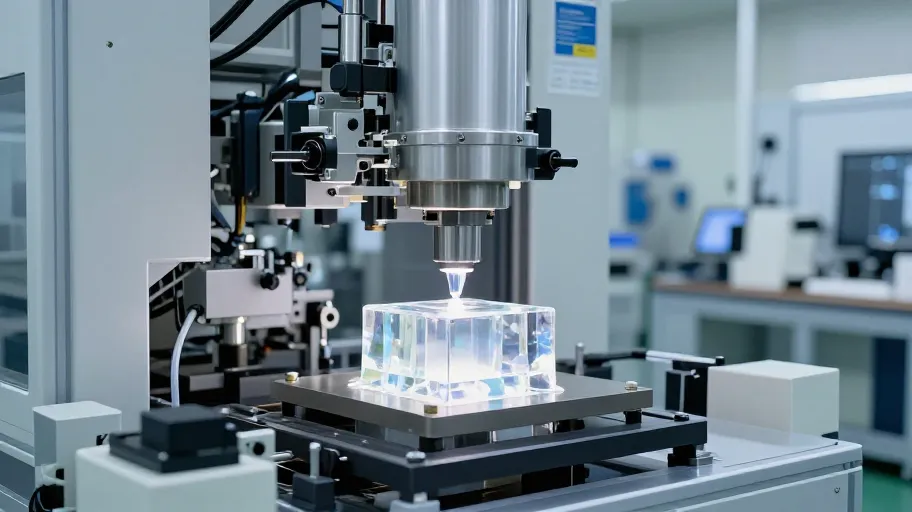
Verifying a manufacturer’s Czochralski (CZ) growth process means you get sapphire crystals with fewer internal flaws because stable temperature control reduces dislocation density. That translates directly into higher yield rates and lower field failure risk—because even a 0.5% defect rate can cost a global wearable brand $2 million annually in warranty claims and reputational damage.
Crystal orientation precision means your devices survive daily impacts better because sapphire is anisotropic—its strength depends on cut direction. When blanks are aligned along the c-axis using X-ray diffraction, they offer up to 35% higher fracture toughness. One European OEM saw screen replacement rates drop by 22% within six months of switching to a supplier with this capability. For your team, that means fewer support tickets and stronger customer retention.
Full-spectrum transmittance testing ensures biometric sensors work accurately because modern wearables rely on UV, visible, and near-infrared (NIR) light transmission. If sapphire blocks too much at 940 nm—a common heart-rate monitoring wavelength—sensor performance degrades, forcing firmware teams to compensate with power-hungry algorithms. Manufacturers who test across all bands deliver components that match design intent, so your R&D team spends less time debugging and more time innovating. This alone can shorten validation cycles by three to five weeks.
Why Process Control Beats Price Per Unit
Time-stamped CZ furnace logs showing ±1°C stability mean consistent crystal structure because thermal fluctuations above that threshold increase dislocation density tenfold. Facilities maintaining tight control achieve densities below 100/cm²—meeting MIL-STD-883 standards for ruggedized optics. Open-loop systems with ±3°C swings often exceed 1,000/cm², leading to early cracking under stress. For procurement teams, paying slightly more per unit avoids costly infant mortality in end products.
100% dark-field microscopy inspection means surface defects are caught before shipment because microscopic scratches or pits become failure points under mechanical load. Top-tier suppliers also measure surface roughness via atomic force microscopy to ensure Ra < 0.5 nm—a level required for high-clarity coatings. When paired with root cause analysis and corrective action reports delivered within 72 hours, this creates a feedback loop that continuously improves quality. One Tier 1 supplier reduced repeat issues by 68% after linking AI-powered defect classification to real-time process data.
Raw material traceability with ICP-MS-certified alumina means no hidden impurities like iron or sodium that act as crack nucleation sites. Leading manufacturers source from vertically integrated refineries or have long-term contracts with mines in Australia or Guinea, ensuring both purity and resilience against export disruptions. In 2023, when alumina tariffs spiked temporarily, brands tied to transparent suppliers avoided delays because their partners could prove origin and bypass customs scrutiny—keeping production lines running.
Rigorous vetting means faster innovation because engineering teams stop firefighting material inconsistencies and start advancing next-gen features. One client reduced prototype iterations from five to two simply because their new supplier delivered spec-compliant blanks on first run. That saved four months in development and allowed an earlier launch—capturing 18% of Q4 holiday sales ahead of a key competitor’s refresh cycle.
Turn Your Supply Chain Into a Strategic Advantage
Proper manufacturer evaluation means turning supply chain risk into competitive advantage because consistent component quality accelerates time-to-market, strengthens investor confidence, and supports global scale. When your sapphire partner delivers reliable materials, your product launches aren’t delayed by last-minute QA failures or recalls.
ISO 9001 certification alone doesn't guarantee performance—it's just entry-level assurance. What matters more is whether they perform full batch testing, share CoCs with spectral data, and allow third-party audits. These practices mean you can pass regulatory reviews smoothly and respond quickly to market inquiries about material origins.
In today’s market, consumers expect flawless device performance and regulators demand greater transparency. Choosing a sapphire crystal china factory isn’t a procurement decision—it’s a strategic lever for brand integrity. The right partner enables you to innovate faster, enter new markets confidently, and build trust one crystal at a time.