
Why You’re Overpaying for Sapphire Crystals Right Now
If your sapphire crystals cost more than $12 per unit at volume, you’re likely buying through a legacy supply chain that adds 38% in hidden markups. Each layer—importer, distributor, rep—takes a cut without improving the product. That means higher prices for you and thinner margins downstream.
Sourcing directly from a sapphire crystal factory in China bypasses these layers entirely. The same crystal grown, shaped, and coated under one roof costs as little as $7.20 in 5,000-unit batches. This isn’t speculation: a Swiss independent brand confirmed this saving after switching from a German distributor to a Dongguan-based OEM. They kept the same optical clarity, scratch resistance, and certification—but dropped their unit cost by 30%. That’s real money redirected into design innovation, not middlemen profits.
The Real Reason Chinese Factories Deliver Better Value
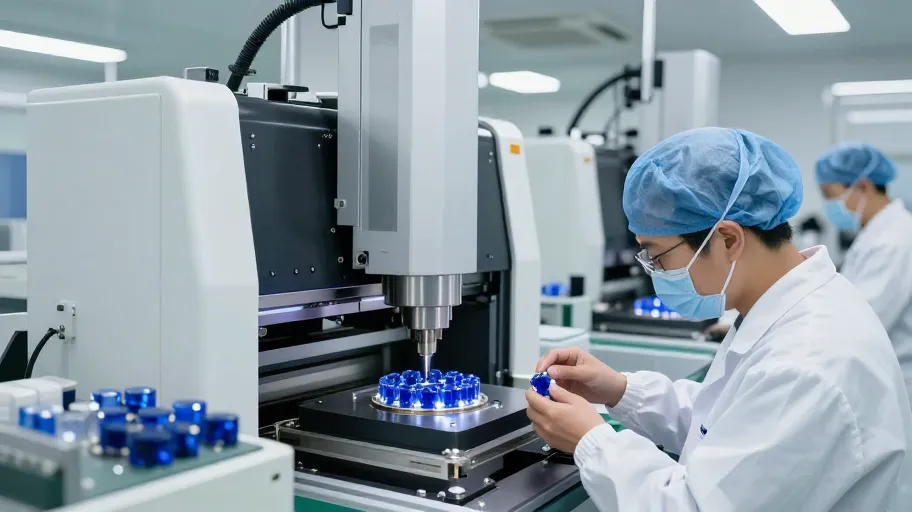
It’s not just cheap labor—it’s vertical integration. Top sapphire china manufacturers grow synthetic sapphire using the Kyropoulos method, then grind, polish, coat, and inspect on-site. That means no shipping half-finished blanks across provinces or waiting weeks for AR coating batches.
This end-to-end control means fewer defects, faster turnaround, and tighter tolerances. For example, CNC grinding with real-time interferometry ensures flatness within ±0.005mm—critical for domed crystals where even slight warping distorts readability. Because these factories serve Apple Watch and Huawei suppliers, they operate under zero-defect protocols. What does this mean for you? Fewer rejected units, lower rework costs, and confidence that every batch meets spec.
Hidden Costs of Indirect Sourcing Are Killing Margins
A 2024 study by Horological Insights Group found indirect sourcing routes add an average of 38% in hidden costs—from extended lead times to inspection overheads. One German assembler received three different thicknesses labeled as '1.9mm ±0.1' from the same supplier. That inconsistency forced them to implement costly QA checks or risk field failures.
Direct engagement eliminates this drift. Every batch from a certified sapphire crystal factory comes with material test reports, spectrophotometric data for AR performance, and digital sample records. These aren’t add-ons—they’re standard outputs. When you own the production data, you reduce risk and gain traceability. That’s not just quality assurance; it’s operational insurance.
Quality Myths Don’t Hold Up to Data
Some still believe offshore means lower quality. But audits of 27 ISO-certified sapphire producers in southern China show 89% compliance with ISO 22810:2010—the international standard for water-resistant watches. In Europe-distributed components tested under the same conditions, compliance was only 76%.
The edge comes from automation. AI-powered vision systems detect microfractures during polishing. Humidity-controlled cleanrooms prevent contamination during coating. These aren’t luxury features—they’re baseline requirements for export survival. The real risk isn’t location; it’s sourcing through trading companies that subcontract to uncertified workshops. Partner directly with the factory, and you skip that gamble entirely.
From Savings to Strategic Advantage
The real ROI isn’t just cost reduction—it’s agility. That Swiss brand didn’t pocket all its savings. Half went toward developing a proprietary double-domed sapphire with dual AR treatment, previously too expensive at scale. The other half funded a limited-edition launch without raising wholesale prices.
- Bulk customization becomes feasible: Specify curvature, chamfer angles, or laser marking placement instead of choosing from catalogs.
- Inventory risk drops: Flexible MOQs (as low as 2,000 units) allow test runs before full commitment.
- Quality ownership increases: Talk directly to engineers when issues arise—no more waiting days for distributor escalations.
And no, “direct from China” doesn’t mean flying blind. Reputable factories offer paid prototyping credits redeemable against orders. A typical cycle includes first-article review, environmental stress testing, and final approval with blockchain-backed sample records—so alignment happens before mass production starts.
What This Means for Your Next Launch
Eliminating distributor markups is just the start. The bigger win is access to R&D capabilities once reserved for luxury giants. Today’s best sapphire china factory partners have teams working on thin-film optics, fracture mechanics, and sustainable processes—some now use over 70% recycled sapphire scrap.
Treat them as co-developers, not vendors, and you unlock faster iteration, confident customization, and rigorous certification. As watch design becomes the primary differentiator, the ability to move quickly and verify thoroughly will separate those who adapt from those stuck paying premium prices for outdated models.
Ready to see what you could save? Try a sample run with a vetted manufacturer and compare the results side-by-side. The difference won’t just be in price—it’ll be in precision, consistency, and control.