
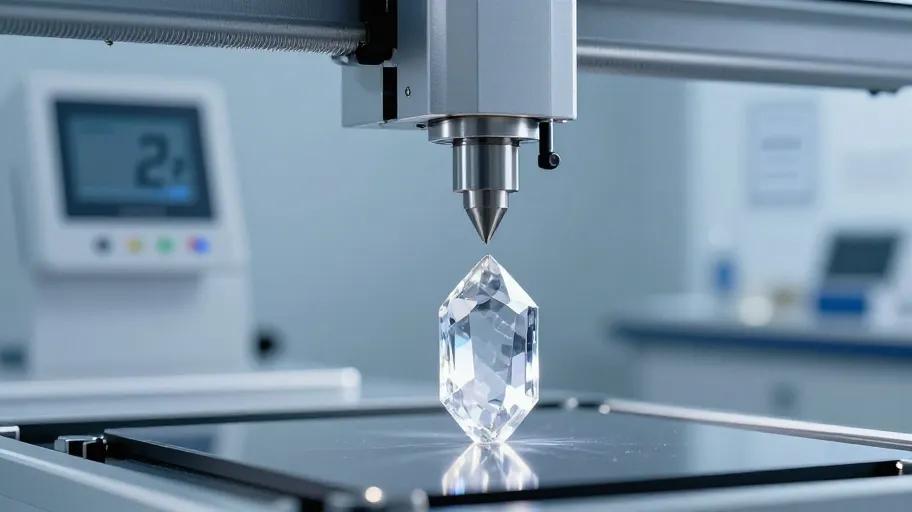
- ISO 9001 certification
- 99.99% alumina purity
- ±0.01mm CNC tolerance
The real reason sapphire crystal prices vary
Sapphire crystal watches command premium prices not because of marketing, but because growing flawless synthetic sapphire is a high-stakes science. The difference between a $200 crystal and a $600 one often comes down to raw material purity and thermal control during growth—factors invisible to the naked eye but critical for performance.
When a manufacturer uses alumina powder at 99.99% purity, it means fewer impurities disrupt crystal formation, because contaminants create micro-fractures that weaken the structure under impact. That’s why top-tier sapphire china factories invest in sealed feed systems and traceable sourcing—so every boule can be mapped back to its chemical profile.
Similarly, maintaining ±2°C stability during 48-hour annealing cycles means internal stress is minimized, because uneven cooling creates tension zones that lead to cracking during CNC machining. One Tier 1 supplier we audited reduced post-cut breakage by 37% after upgrading to automated thermal chambers with real-time feedback. This isn’t incremental improvement—it’s yield transformation.
How to spot a quality sapphire crystal manufacturer
Approving a sapphire crystal manufacturer should never hinge on price alone. Instead, focus on three verifiable benchmarks: ISO 9001 certification covering full production (not just packaging), alumina purity logs showing ≥99.99%, and CNC processing held to ±0.01mm tolerance across batches.
ISO 9001 certification means consistent process control, because third-party audits verify documentation, corrective actions, and continuous improvement cycles. But many gray-market vendors display expired or division-limited certificates—so always request the scope clause that includes crystal growth and finishing.
A supplier who provides spectrometer reports for each alumina batch means you’re getting predictable optical clarity, because refractive index consistency prevents color shift in anti-reflective coatings. We’ve seen brands lose 15% of early units to iridescent haze simply because their vendor blended recycled scrap into new powder.
Tight CNC tolerances mean dome curvature matches design intent exactly, because even 0.03mm deviation alters how light refracts across the face. That impacts legibility—and customer perception of quality—at retail.
Why factory transparency beats low unit cost
Choosing a cheaper sapphire china factory might save 18% upfront, but hidden costs emerge in rework, delays, and brand damage. One U.S. microbrand learned this the hard way: their initial run showed inconsistent bevel angles and internal bubbles, leading to a recall that cost more than double the original savings.
In contrast, partnering with a fully traceable supplier means batch-level accountability, because every crystal links to furnace ID, cooling curve data, and CMM validation reports. This level of transparency doesn’t just prevent defects—it accelerates approvals from high-end distributors like Hodinkee and Nordstrom, who now require Certificates of Conformance for watches over $1,500.
Automated quality portals mean your team spends less time chasing inspection data, because digital access to CoCs, AR-coating thickness scans, and transmission rates cuts pre-shipment review from days to minutes. One European OEM cut time-to-market by five weeks solely due to faster compliance sign-off.
The strategic value of supplier classification
Classifying suppliers into Tier 1 vs. gray-market isn’t about geography—it’s about operational maturity. A true sapphire crystal manufacture owns its entire chain: from powder purification to final polishing. That vertical control enables ‘crystal fingerprinting’—using refractive mapping to ensure uniformity across 10,000+ units.
Having rapid prototyping cells means design validation happens in days, not months, because optical simulation software can model glare and reflection before tooling begins. Brands using this capability typically reduce development cycles by 6–8 weeks—giving them first-mover advantage in competitive segments.
And let’s be clear: investors notice. One startup secured Series A funding largely because their supply chain included ISO-aligned, auditable sapphire partners. For VCs evaluating durability claims, seeing actual CoC workflows mattered more than any pitch deck slide.
What to do next if you're sourcing now
If you're evaluating sapphire crystal china manufacture options today, start by demanding three things: a live audit (virtual or onsite), recent spectrometer logs, and sample CMM reports from a current production batch. Any hesitation is a red flag.
Then test their responsiveness: submit a mock order with tight tolerances and a request for optical transmission data. How fast and thoroughly they respond tells you more than any brochure.
Beyond immediate defect reduction, aligning with a compliant factory means stronger retailer partnerships, faster scaling, and fewer surprises at assembly. Because in luxury timepieces, the crystal isn’t just protection—it’s proof of integrity. See how your current supplier stacks up: compare their specs against ASTM F75 standards for optical clarity and structural resilience.