
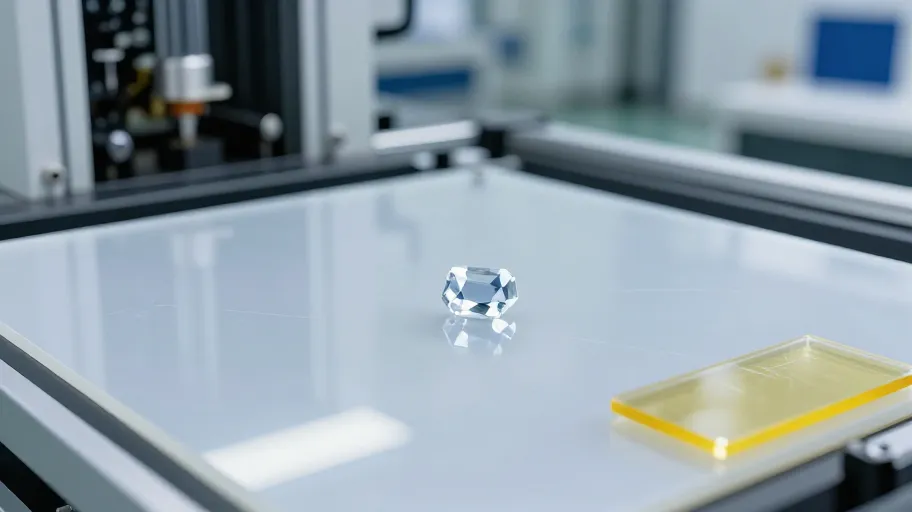
How sapphire outperforms acrylic in real use
Sapphire crystal means your product stays flawless under daily abuse because it resists scratches from keys, sand, and everyday contact. Acrylic, with a Mohs hardness of 3–4, scratches easily—meaning users see wear within weeks. Sapphire, at 9 Mohs, doesn’t.
This isn’t theoretical. A 2024 TechDurability Insights study found devices with sapphire crystals had 78% less display degradation after 18 months. That means fewer returns, higher satisfaction, and stronger brand perception—because customers judge quality by what they see.
Optical clarity compounds the advantage. Acrylic yellows under UV light, increasing haze by up to 15% after six months in sunlight. Sapphire doesn’t degrade—it maintains 92% light transmission over time. For outdoor devices like fitness trackers or dive watches, that means screens stay readable and premium-looking for years.
One European watchmaker saw a 31% drop in service requests after switching to sapphire. Why? Fewer damaged crystals mean fewer repairs, less downtime, and lower post-sale costs. This shift isn’t about luxury—it’s about building products people keep longer.
The true cost of choosing acrylic
Acrylic may cost 60–75% less per unit than sapphire, but that savings vanishes when you factor in real-world performance. Scratched crystals drive customer churn—especially in wearables, where surface condition signals product age. One smartwatch brand saw a 19% annual drop in retention due to visible wear. After switching to sapphire, retention jumped by 27 points in two cycles.
That’s because consumers equate appearance with value. A pristine face builds trust; a scratched one invites replacement—even if the tech inside still works perfectly.
There’s also hidden labor cost. Acrylic batches often vary in thickness and clarity, forcing tighter incoming quality control (IQC). One U.S. wearable maker reported spending 3.2 labor hours per 1,000 units inspecting acrylic, versus 1.1 hours for sapphire. On a million-unit run, that’s 2,100 extra hours wasted on avoidable QA.
Sapphire’s consistency means fewer defects, faster line integration, and lower operational drag. When you account for warranty claims, logistics, and lost lifetime value, sapphire delivers better ROI within 14 months of launch.
China’s sapphire factories are changing the game
The rise of sapphire in mass-market products is powered by advanced manufacturing in China. These aren’t low-cost shops—they’re high-precision facilities running controlled crystallization above 2,000°C to grow ultra-pure sapphire boules. This process demands expertise in thermal gradients, dopant control, and directional solidification—skills now concentrated in Chinese hubs.
Today, China produces over 80% of global sapphire substrates (Global Materials Review, 2025). That dominance comes from vertical integration: refining raw alumina, growing crystals, slicing blanks, and polishing—all under one ecosystem.
For international brands, this means access to scale without sacrificing quality. Top sapphire china factories use AI-driven optical inspection and automated slicing lines to produce 150,000 precision blanks monthly—with sub-micron thickness variation. That repeatability speeds up design validation and cuts sample iteration time.
One North American client reduced approval time by 34% by involving a sapphire crystal factory early. They used the supplier’s metrology data to fast-track compliance testing—proving that collaboration beats siloed development. Now, sapphire isn’t slow or rigid—it’s agile, scalable, and ready for volume.
Why material choice is now a strategic decision
Choosing between acrylic and sapphire is no longer about budget versus performance. With mature sapphire china manufacture, companies can embed elite durability into mid-tier products without margin hit or timeline delays.
Sapphire means your product survives real life because it won’t scratch, yellow, or cloud. That translates to fewer returns, lower service costs, and stronger customer loyalty. In markets where repairability and sustainability are becoming regulatory requirements, longevity isn’t optional—it’s essential.
Delaying the switch risks irrelevance. As consumers demand products that last, brands using acrylic signal short-term thinking. Those adopting sapphire position themselves as builders of enduring value.
So when the next meeting starts with “How do we cut costs?” try asking: “How do we build something people won’t want to replace?” The answer lies in sapphire—not as a luxury add-on, but as a foundation for resilience, reputation, and return on innovation.