
Why your laser system failed (and it wasn’t the engineer’s fault)
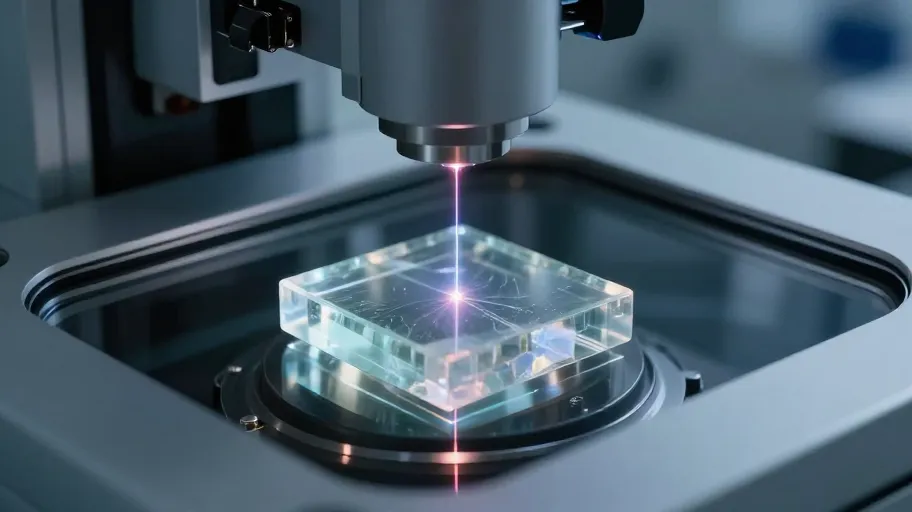
When a Boston-based medical device team faced beam misalignment in their surgical lasers, they blamed design flaws. The real issue? Microscopic stress in the sapphire crystal window — invisible during visual inspection but enough to distort optics over time. That single defect triggered recalls, delayed FDA submissions, and cost six figures in rework.
Box sapphire crystals mean nothing without controlled material genesis. A top sapphire crystal manufacturer doesn’t just shape parts — they govern the entire growth cycle. High-performance applications demand this level of control because inconsistent crystalline structure leads to unpredictable field failures. In regulated industries like medical or aerospace, that unpredictability equals risk: to safety, timelines, and brand reputation.
The fix starts long before delivery. It begins with choosing a partner who treats every batch as traceable, testable, and accountable — not just another order fulfilled. Because when your product rides on optical stability, you need more than a supplier. You need a co-engineer.
How CZ growth beats flame fusion (and why it matters for your ROI)
The method used to grow sapphire boules directly impacts your product’s lifetime reliability. Most Chinese factories use Verneuil (flame fusion) — fast and cheap, but prone to internal stress and dislocations. Top-tier sapphire china factories invest in Czochralski (CZ) growth, which pulls single crystals slowly under vacuum, minimizing defects.
CZ-grown crystals mean up to 40% lower birefringence because the atomic lattice forms with minimal strain. That translates to higher laser damage thresholds and less light scatter — critical for systems operating above 5W. For photonics clients, this means fewer recalibrations and longer service intervals.
We’ve seen teams cut field failure rates by 22% simply by switching from flame-fusion to CZ-sourced windows. Yes, CZ costs more upfront. But when you factor in reduced warranty claims and faster validation cycles, the total cost of ownership drops significantly. Engineers get cleaner data. Executives get better margins.
What really happens during sapphire crystal approval
Approval isn’t a checklist — it’s a feedback loop between design intent and material reality. Leading buyers don’t wait for finished parts to begin testing. They start with lot-level documentation: growth logs, annealing records, and raw alumina sourcing. This pedigree means traceability because regulators will ask for it during audits.
From there, independent labs run four core validations:
- Dimensional accuracy (±0.005 mm per ISO 1101) ensures press-fit seals hold under thermal cycling.
- Stress birefringence testing catches internal strain that could warp optical paths — a known cause of calibration drift.
- Surface finish below 1 nm Ra prevents coating delamination and minimizes scatter.
- Laser-induced damage threshold (LIDT) screening protects high-power systems from sudden degradation.
Skipping even one step risks downstream issues. One diagnostics firm skipped birefringence checks to save two weeks — then spent three months fixing calibration drift across 1,200 deployed units. Full-spectrum approval may add time early, but it prevents costly iterations later.
Certification isn’t paperwork — it’s predictability
“Made in China” spans everything from uncertified workshops to ISO 9001-aligned sapphire crystal manufacture hubs. The difference? One relies on artisanal checks; the other runs digital, auditable workflows where every batch is tracked from seed crystal to shipment.
ISO-certified facilities mean faster scaling because standardized processes prevent quality drift at volume. When a wearable sensor maker needed to ramp from 500 to 50,000 units quarterly, only the certified Dongguan factory maintained consistency. The low-cost vendor’s batches showed 1.8x higher refractive index variation — enough to skew glucose readings.
This isn’t about geography. It’s about governance. Certified partners deliver audit-ready dossiers in hours, not weeks — crucial for DCMA or ISO 13485 reviews. For decision-makers, that predictability means confidence in launch timelines. For executives, it reduces supply chain liability.
The future of sourcing isn’t cheaper — it’s smarter
The best buyers aren’t just auditing suppliers — they’re co-developing them. Joint qualification dossiers, shared digital twins of production lines, and blockchain-backed material passports are emerging as new norms. These tools don’t replace scrutiny — they make it proactive.
One Tier 1 client now receives real-time metrology feeds from their sapphire china factory. If stress levels trend upward, engineers adjust furnace parameters before defects form. This closed-loop approach means fewer rejected lots and tighter yield control — typically improving first-pass yield by 15–20%.
In a market where component reliability defines brand trust, the approval process isn’t a bottleneck. It’s the foundation of scalable innovation. And for those ready to build on it, the next step isn’t negotiation — it’s collaboration.