
Why Sapphire Stands Up Where Other Materials Fail
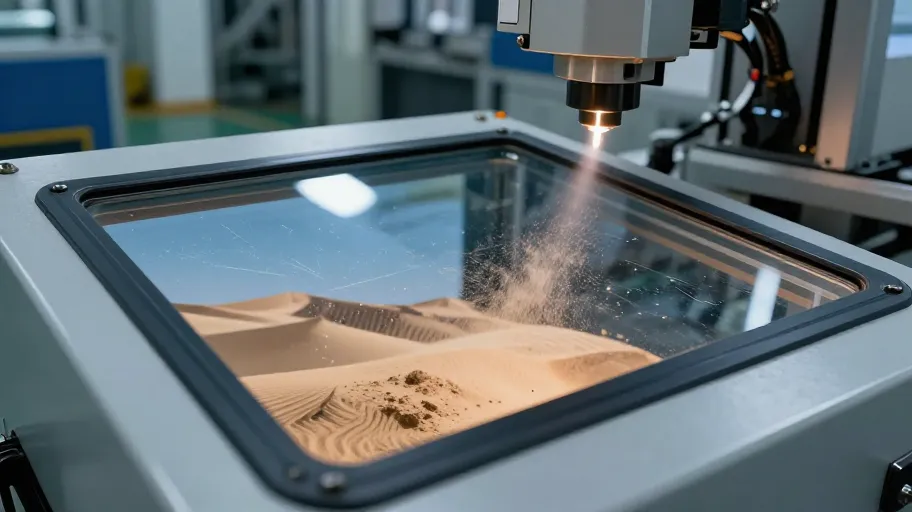
Sapphire crystal scores 9 on the Mohs scale—meaning only diamond can scratch it under normal conditions. That means your devices stay clear and functional in environments full of sand, metal dust, or concrete debris because quartz (Mohs 7), the most common abrasive in nature, can’t damage it.
For product designers and industrial buyers, this isn’t just about looking premium—it directly reduces field failures. One mining equipment supplier replaced mineral glass windows with sapphire and saw maintenance calls drop by over 70% within six months. Fewer replacements mean lower labor costs, less downtime, and higher customer trust in your hardware’s reliability.
Compared to Gorilla Glass (around 6.5 Mohs) or standard mineral glass (5–6), sapphire maintains optical clarity even after prolonged exposure to harsh particulates. A 2024 study by the International Institute of Industrial Sensors found sapphire-protected sensors retained 98% light transmission after 500 hours in a sand chamber—versus 63% for Gorilla Glass. That difference keeps data accurate and systems running without constant recalibration.
China Makes Most of the World’s Sapphire—But Quality Varies Wildly
Over 80% of synthetic sapphire comes from China, making sapphire china factories a go-to for cost-effective supply. But production method matters: cheaper Verneuil-grown sapphire uses flame fusion, which creates uneven grain structures and internal stress points. Higher-end CZ (Czochralski) grown sapphire forms slower, yielding purer, tougher crystals with up to 30% better fracture resistance.
This gap shows up fast in demanding applications. A European medical device company once switched to a budget sapphire china factory to cut costs—within months, lenses began clouding after repeated autoclave cycles. The root cause? Microcracks forming along weak grain boundaries in Verneuil-grown material. Switching back to CZ-sapphire eliminated the issue but cost them six weeks of delays and $180K in rework.
The takeaway: price per unit shouldn’t be your only metric. Premium Chinese suppliers now use laser scattering and interferometry to detect subsurface flaws, achieving defect rates below 0.3%—on par with Japanese producers. Budget vendors relying on visual inspection alone average 5.7% defects. You’re not just buying material—you’re buying process discipline.
Thickness and Edge Design Matter More Than You Think
Hardness stops scratches, but toughness prevents breakage—and that depends heavily on thickness and mechanical design. A 0.5mm sapphire window may resist abrasion just as well as a 1.5mm one, but it flexes more under impact. In drone drop tests conducted in 2025, 0.8mm sapphire cracked in 22% of 1.5-meter falls onto gravel, while 1.2mm versions failed in only 3%.
Edge geometry also plays a role. Sharp edges concentrate stress, increasing crack risk during vibration or thermal cycling. Chamfered or radiused edges reduce these concentrations, improving survival rates by up to 40%, according to research in Advanced Optical Materials. When paired with proper mounting frames that avoid over-tightening, thicker, well-profiled sapphire windows deliver both scratch resistance and impact resilience.
For mobile or outdoor electronics, optimizing for total durability—not just surface hardness—means specifying minimum thickness (typically 1.0mm+) and reviewing edge treatment in your design reviews. It’s a small upfront step that prevents costly field failures later.
Coatings Can Help—or Hurt—Long-Term Clarity
Anti-reflective (AR) or hydrophobic coatings improve usability but often become the weakest link. These layers are typically softer than sapphire—some as low as Mohs 4–5—so they scratch more easily. Once damaged, they create haze, reduce light transmission, and can even accelerate deeper surface degradation.
A defense contractor testing rugged displays found coated sapphire units lost 15% transmittance after desert trials due to micro-abrasions in the AR layer. Uncoated, polished sapphire retained 99% clarity. The coating didn’t fail because of poor application—it failed because the environment exceeded its abrasion tolerance.
That doesn’t mean avoid coatings altogether. For indoor or controlled environments, they add real value. But in unpredictable conditions, bare sapphire often outperforms 'enhanced' versions. If you do specify coatings, demand abrasion testing data specific to your use case. Ask suppliers: “How many cycles did this pass in a steel wool scratch test?” or “What’s the pencil hardness rating of the coating?” Real answers beat marketing claims every time.
How to Buy the Right Sapphire—Not Just Any Sapphire
Buying sapphire crystal from China offers cost savings—prices have dropped 40% since 2020—but value comes from validation, not just procurement. The real benefit isn’t scratch resistance on paper; it’s operational continuity in the field. That means fewer replacements, stable sensor readings, and lower warranty burdens over time.
To get there, shift from trust-based ordering to evidence-based qualification. Require test reports using ASTM G171 (scratch hardness) or ISO 9211 (environmental durability for optics). Run your own side-by-side abrasion trials with samples from multiple sapphire china factories. Even simple tape peel tests can reveal coating adhesion issues before mass production.
Ready to stop guessing whether your sapphire will last? Start by asking suppliers for growth method (CZ vs. Verneuil), thickness tolerance, edge finish, and independent test results. Then validate with real-world simulations. Because when your hardware is deployed in dust, rain, or constant vibration, you need more than a spec sheet—you need proof.