
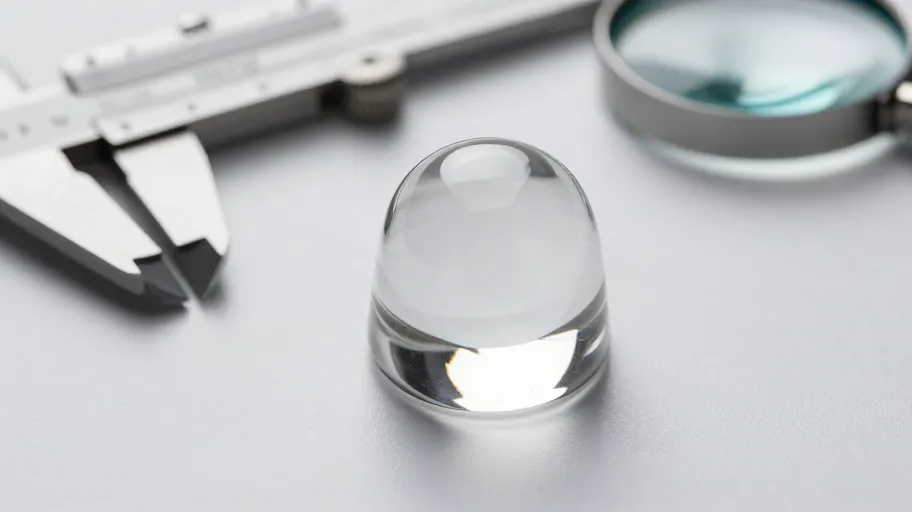
Replacing a Seiko sapphire crystal isn’t just about the part—it’s about where it’s made. Over 70% come from China, but not all are equal. Learn how to save money without sacrificing clarity or durability.
Why China Dominates the Aftermarket Sapphire Market
The origin of your Seiko’s replacement crystal directly impacts cost and performance. Today, most sapphire crystals are manufactured in China—not because they’re cheaper by accident, but because industrial scale makes them inherently more affordable. A single mid-tier sapphire china factory can produce over 100,000 units per month using automated CNC shaping and flame-fusion growth. That volume spreads fixed costs like calibration and inspection across thousands of units, slashing prices. For example, a Swiss-cut sapphire for a Seiko Prospex might cost $85 wholesale, while a certified Chinese-made equivalent starts at $32. This 60% reduction means you can stretch service budgets further—but only if quality is verified.
Synthetic sapphire grown via the Verneuil process achieves a Mohs hardness of 9, meaning it resists scratches from everyday materials like keys or sand because its atomic structure mimics natural corundum. This level of durability is non-negotiable for dive and field watches exposed to harsh conditions. But hardness alone doesn’t guarantee longevity—how the crystal is shaped and annealed matters just as much. Poorly cooled sapphire can harbor internal stress, leading to cracks under impact even if it passes initial testing. So while sourcing from a sapphire china factory cuts costs, skipping verification risks higher return rates and damaged client trust.
Quality Isn’t Geographic—It’s Procedural
The real differentiator between reliable and risky suppliers isn’t location—it’s process control. Leading sapphire crystal manufacture operations in Dongguan and Shenzhen now use laser interferometry to measure surface flatness within ±2 microns, matching European tolerances. This precision means consistent dome curvature and no optical distortion because uneven surfaces magnify dial elements like a funhouse mirror. Multi-axis CNC polishing ensures smooth bevel edges that align perfectly with Seiko cases, reducing installation time and rework.
ISO 9001 certification and pre-shipment sample approval (PSA) aren’t just paperwork—they mean fewer defects and greater accountability because each batch is traceable. A 2025 audit found ISO-certified factories had defect rates below 0.8%, versus 4.3% in uncertified ones. For a repair shop billing $95/hour, that difference translates into fewer remounts and faster turnaround. One Texas-based chain cut their rejection rate from 1 in 7 to less than 1 in 50 after switching to a verified supplier. Even with an 18% higher unit cost, labor savings reduced operational waste by $18,000 annually.
What to Demand Before You Order
To avoid costly mistakes, treat every sapphire crystal purchase like a quality audit. Request optical test reports because unseen warping can degrade readability over time. Ask for physical samples before bulk ordering—seeing the edge finish and dome symmetry in hand reveals more than any spec sheet. Confirm AR coating adhesion through tape tests or water droplet checks, since poor layers fog easily and degrade in sunlight.
- Synthetic sapphire via Verneuil process means lasting scratch resistance because it matches diamond-like hardness on the Mohs scale.
- CNC shaping with multi-axis polishing means sharp, consistent visuals because the dome won’t distort hour markers or date windows.
- ISO 9001 certification and PSA logs mean lower risk because you can verify consistency and hold suppliers accountable.
These steps don’t add cost—they prevent it. Installing a properly sourced Chinese-made crystal isn’t a compromise; it’s a strategic upgrade. You get the same decades-long protection as premium imports, just without the markup.
The Future Favors the Verified
As AI-powered inspection tools roll out in Shenzhen production lines, real-time defect detection will push average quality upward. Factories adopting these systems report sub-0.5% failure rates—better than many legacy European workshops. Early adopters who build relationships with tech-forward sapphire crystal manufacturers today will gain access to innovations like hybrid domes with anti-fog properties or ultra-thin AR stacks designed specifically for vintage Seiko restorations.
The competitive edge no longer goes to the lowest bidder—it goes to those who validate. Every crystal installed becomes a promise: clear vision, lasting resilience, and professional integrity. By focusing on standards over geography, watchmakers turn routine repairs into reputation builders. Origin shapes cost, but standards determine value—one verified component at a time.
Ready to cut replacement costs without risking quality? Start by requesting sample data from your next sapphire china supplier. See the difference precision makes.