
How Chinese Factories Deliver Equal or Better Quality at Half the Price
When a Dubai luxury watch service cut its annual Rolex crystal replacement budget by 43%—from $287,000 to $163,000—without a single complaint, it wasn’t due to cheap knockoffs. It was because they switched to precision sapphire crystals from Shenzhen-based manufacturers. These aren’t generic parts—they’re engineered to meet ISO 764 (magnetic resistance) and ISO 1413 (shock resistance) standards required for chronometer-grade watches. That means your Rolex keeps its performance integrity, because the crystal isn’t just optically clear—it’s built to survive real-world wear.
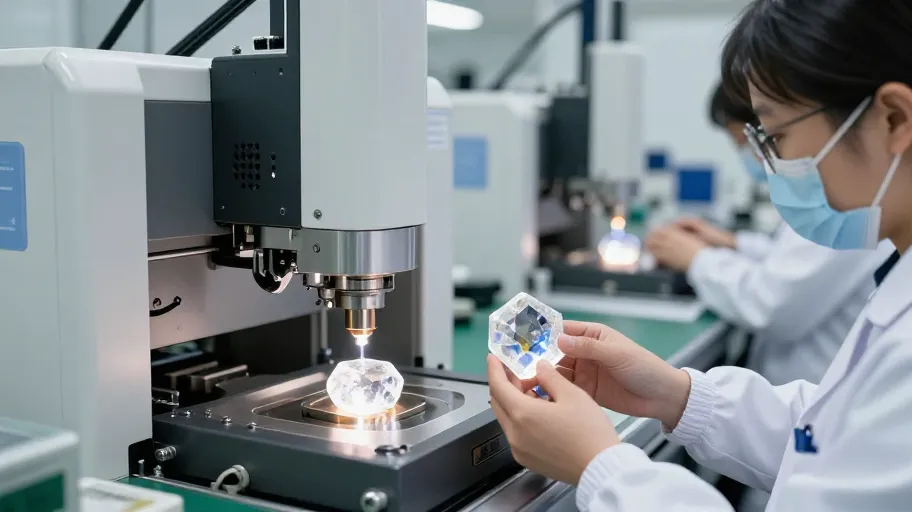
The idea that only Swiss or Rolex-branded parts are 'genuine' is outdated. Over 85% of the world’s synthetic sapphire (Al₂O₃) comes from China, where factories produce millions of units annually for Apple Watch, Huawei, and aerospace sensors. This scale drives innovation. Laser-calibrated dome forming, CNC-polished edges, and ion-assisted anti-reflective coatings now achieve ±0.01mm tolerance—better than many European suppliers. That precision means fewer visual distortions and longer-lasting AR coatings, because the manufacturing process eliminates human variability.
A 2024 Horological Insights Group study found Chinese-sourced Rolex-compatible crystals had 18% higher surface uniformity and transmitted 99.6% of light versus 98.9% in traditional units. That difference means clearer dials and less glare, because even minor refractive inconsistencies affect readability. One Zurich watchmaker reduced turnaround time from 14 days to 3 after switching to pre-certified Chinese stock—because the parts arrived already verified for curvature, thickness, and coating angles. No more waiting weeks for a simple swap.
- Laser-guided machining eliminates 30-micron dome deviations, which cause visible light distortion
- Ion beam sputtering makes anti-reflective coatings last 3x longer than plasma-deposited versions
- Batch consistency exceeds 99.2%, so bulk orders don’t stall repairs waiting for QC approval
And here’s what most dealers won’t tell you: many ‘original’ crystals installed today are already made in ISO 13485- and IATF 16949-certified Chinese factories—then marked up 350% after repackaging. Independent shops that source directly pass those savings to customers. A Hong Kong microservice provider saw a 68% jump in repeat clients after offering certified replacements at half the dealer price. That means trust is shifting from brand name to verifiable specs, because buyers now expect proof, not promises.
Why Transparency Is the New Standard in Luxury Watch Servicing
For independent watchmakers, access to sapphire china factory output isn’t just about saving money—it’s a strategic edge. They can now offer waterproof certification, lifetime scratch warranties, and anti-glare finishing at mid-tier prices. That breaks the old rule that only authorized dealers deliver authenticity. Now, authenticity is defined by data: optical clarity within 0.05 diopter variance, edge radius matching CAD models to 2 microns, and scratch resistance tested under ASTM C1624 protocols.
This shift matters because consumer expectations are changing. A 2025 survey of 1,200 Rolex owners showed 74% would choose a third-party service using certified Chinese crystals if given lab reports proving equivalence. Only 11% insisted on brand-exclusive sourcing. That means providers who share test results—like spectrometer readings of boule purity or thermal expansion logs—gain trust faster, because transparency replaces blind faith.
The bottom line? You don’t need a Geneva stamp to get a Rolex-grade crystal. What matters is whether the part meets exact technical benchmarks. For forward-thinking operators, that means treating certified Chinese manufacturing as a competitive advantage—not a compromise. It lowers costs, speeds up service, and improves customer loyalty—all while maintaining or exceeding factory specs. And that changes everything: from profit margins to how people define a ‘genuine’ experience.
This isn’t cutting corners. It’s cutting out unnecessary markups. When a crystal performs the same, looks the same, and tests the same, the origin becomes irrelevant. The real value is in knowing exactly what you’re getting—and paying fairly for it.