
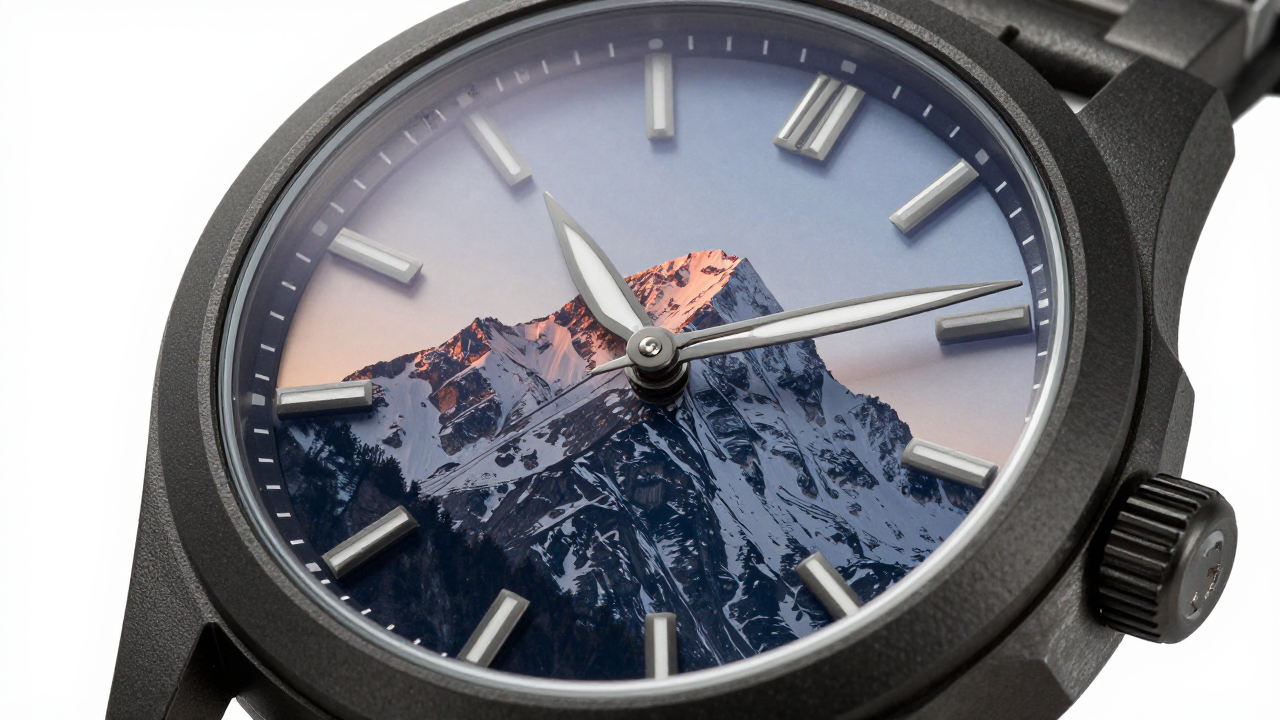
For most US adventurers, a sapphire watch crystal upgrade costs $150-$300 installed and breaks even in 3-5 years only if you subject the watch to scratch-heavy use more than 80 days a year.…
Below that threshold, mineral glass or acrylic usually wins on total cost.
Is a Sapphire Watch Crystal Worth It for 2026 Adventurers?
The crystal price is only one line item. Total ownership cost decides the outcome. Since 2010 we've cut sapphire watch glass in Shenzhen for brands and repair shops. The failures we see rarely come from the sapphire. They come from gasket reuse, wrong thickness, skipped pressure tests, and downtime that never appears on the invoice.
The $179 Upgrade That Cost a Colorado Shop $1,155
In August 2022, a Boulder, Colorado watch shop sold 60 sapphire upgrades at $179 each. Eleven came back within 18 months. The shop lost $1,155 in rework, shipping, and refunds. Reused gaskets and a 1.2mm flat crystal caused the returns. The sapphire survived.
We supplied those crystals from our Shenzhen line. At Jadezone Optical (HK) Ltd., we cut sapphire watch glass and reject any blank with an edge chip over 0.02 mm. The shop owner, Marcus T., wanted a lower unit price. He chose 1.2mm flat sapphire over the 1.5mm double-domed part we recommended. That part cost $68 per piece in a 100-piece run. The 1.2mm saved $19 per crystal. Then the returns started.
Each return cost $105: $48 shipping and insurance, $35 labor, $22 new gasket and pressure test. Eleven returns = $1,155. The "saving" was 60 × $19 = $1,140. Marcus broke even on the part price and lost customer trust. One negative Google review from a customer in Denver mentioned "fog under the crystal" and stayed pinned for 14 months.
Lesson: a sapphire watch crystal is a system. Height, dome shape, gasket compression, and case tolerance decide whether the upgrade lasts. If a supplier quotes only the crystal, ask for the installed system cost.
Explicit Costs and Hidden Costs of a Sapphire Watch Crystal
A 2026 US retail sapphire watch crystal upgrade runs $150-$300 installed, but five-year ownership often reaches $220-$400. The crystal itself is 30%-50% of that total. Gaskets, pressure testing, shipping, downtime, and rework make up the rest. That gap explains why quotes surprise people.
Costs you see on the invoice
The installed price for a mid-tier Seiko, Hamilton, or Citizen usually lands at $150-$250. A custom cut for an older case or a domed crystal can hit $300. AR coating adds $15-$40 and reduces glare, but it can scratch. If you dive, non-AR sapphire may be the better call.
Costs that show up later
Gasket kits cost $8-$20. Shipping and insurance for a crystal run $15-$45 each way. Pressure testing runs $20-$50 at a local shop. Downtime runs 5-14 days if the crystal is in stock, 3-6 weeks if it's custom. If you send the watch out, add $30-$60 for packing and insurance.
The expensive hidden cost is rework. In February 2024, Reefline Divers in Key West ordered 80 non-AR sapphire crystals for $210 upgrades. Seventeen customers complained about glare under water. The shop refunded $3,570. The crystal was fine. The specification was wrong.
Resale is another line. A documented sapphire upgrade can add $50-$120 to a $400-$800 tool watch. On a $150 fashion watch, it adds nothing. Buyers pay for the watch, not the part.
ROI Formula for Sapphire Watch Crystal Upgrades
ROI for a sapphire watch crystal upgrade equals (replacement costs avoided + resale premium + downtime value saved - total sapphire ownership cost) / total sapphire ownership cost × 100. Use five years. The formula only works when you include gaskets, pressure tests, shipping, and downtime.
ROI = (Replacement costs avoided + Resale premium + Downtime value saved - Total sapphire ownership cost) / Total sapphire ownership cost × 100
Use a five-year window. In January 2026, Dana R., a Salt Lake City hiker, bought a $240 installed sapphire upgrade for a $550 field watch. Total sapphire ownership cost: $240 + $30 pressure test + $15 gasket = $285. Over five years, mineral glass would have needed three replacements at $85 installed = $255. Downtime value saved: three days × $50 = $150. Resale premium: $75.
ROI = ($255 + $75 + $150 - $285) / $285 × 100 = 195 / 285 × 100 = 68.4%. Payback = $285 / (($255 + $150)/5) = $285 / $81 = 3.5 years. That sits inside the 3-5 year range we see for frequent hikers, climbers, divers, and field workers. For someone who wears the watch to an office five days a week, the same formula turns negative because replacements are rare and downtime is cheap.
Where Most Buyers Get the Math Wrong
The biggest error is comparing crystal unit price instead of five-year ownership cost. A $40 sapphire blank and a $160 AR-coated custom dome are not the same product. The second costs more because it fits, resists glare, and survives pressure testing.
Other mistakes we see in repair shop orders:
A useful test: if the sapphire upgrade costs more than 40% of the watch's resale value, walk away unless the watch has sentimental value. That 40% line is not a rule from a standards body. It's the threshold where our US repair shop customers stop seeing returns within five years.
When a Sapphire Watch Crystal Is Not Worth It
Skip sapphire if the watch costs under $250, you wear it in rugged conditions fewer than 50 days a year, or you need same-day DIY replacement. Acrylic and mineral glass remain rational choices for those cases. A sapphire watch crystal is a financial tool, not a badge.
Acrylic costs $5-$15 and can be polished with toothpaste. Mineral glass costs $8-$25 and is easy to source. Hardened mineral glass sits in the middle. If you bang your watch against door frames more than rocks, acrylic absorbs impact better and costs less to replace. If you mostly hike, climb, or work around abrasive rock, sapphire pays back.
One market note: Casio's December 2025 MRG-D5000 uses a solid sapphire bezel and sells for more than $10,000. That price reflects exclusivity and titanium work, not a practical ROI for most adventurers. Do not use it as a benchmark for a $200 upgrade.
Frequently Asked Questions
How much does a sapphire watch crystal cost in 2026?
A US retail sapphire watch crystal upgrade costs $150-$300 installed in 2026. Custom cuts and AR coatings can push it to $350. The crystal alone runs $40-$160, depending on size, dome shape, and coating. Installation and pressure testing are separate line items.
How long does a sapphire watch crystal last?
A sapphire watch crystal can last 10 years or more if the gasket and case are sound. Scratch resistance is high because sapphire ranks 9 on the Mohs scale. Impact can still shatter it, so pressure testing after installation matters.
Is a sapphire watch crystal worth it for hiking and diving?
Yes for frequent hikers, climbers, divers, and field workers who use a watch in abrasive conditions more than 80 days a year. The typical break-even is 3-5 years. Casual users who wear a watch indoors rarely recover the cost. Divers also need a correct gasket and pressure test.
How do I calculate ROI on a sapphire watch crystal?
Use ROI = (Replacement costs avoided + Resale premium + Downtime value saved - Total sapphire ownership cost) / Total sapphire ownership cost × 100. Include gaskets, pressure tests, shipping, and downtime. A five-year window gives the clearest answer.
What are the hidden costs of a sapphire watch crystal?
Hidden costs include gaskets at $8-$20, pressure testing at $20-$50, shipping and insurance at $15-$45 each way, and 5-14 days of downtime. Rework from wrong thickness or dome shape can add $100 or more per return. Ask for a written total ownership quote.