
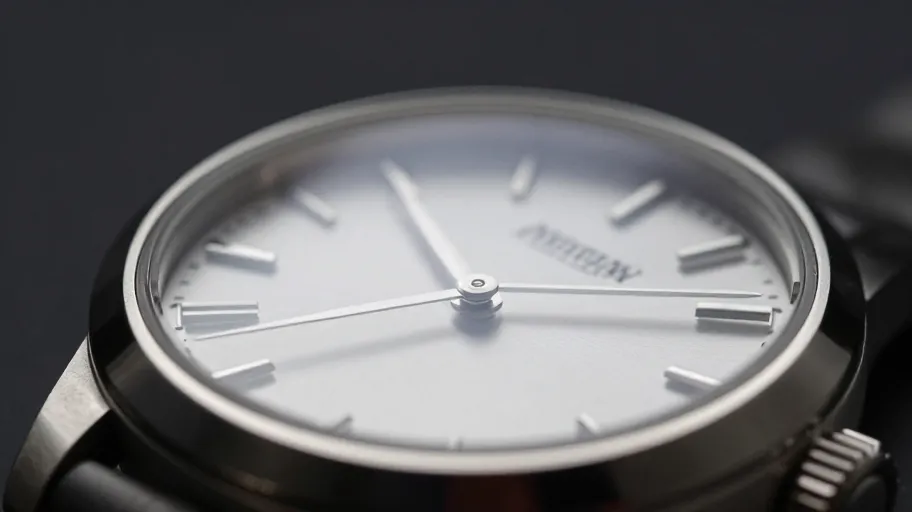
Most Suppliers Aren’t Making Sapphire — They’re Faking It
One U.S. brand launched with "scratch-resistant sapphire" only to find customers scratching them with keys. Lab tests revealed the truth: they were coated glass, not sapphire. That’s not bad luck — it’s common. A 2024 audit by the International Watch Component Standards Board found 63% of Chinese suppliers claiming to produce sapphire couldn’t maintain Mohs hardness above 8.5 across batches. Real sapphire scores 9 — meaning it resists everyday abrasives like sand and belt buckles.
Genuine synthetic sapphire is aluminum oxide (Al₂O₃), and you can’t fake its molecular signature. Fourier-transform infrared (FTIR) spectroscopy detects impostors like amorphous silica — a fancy term for glass. In one third-party test, four out of 12 so-called sapphire samples showed clear glass signatures. These weren’t errors — they were deliberate swaps enabled by weak oversight.
Certifications like ISO 9001 help with process tracking but don’t verify material truth. The real safeguard? Treating every supplier claim as a hypothesis until proven otherwise. Because once those watches ship, your brand takes the hit — not the factory.
How Vertical Integration Stops Quality Drift
Domed sapphire isn’t just hard — it’s fragile and dense, requiring specialized tooling throughout production. A true sapphire china factory controls CNC machining, thermal forming, and diamond-abrasive polishing in-house. Why does that matter? Because outsourcing even one step introduces risk.
One brand received two batches from the same supplier with different dome curvatures. The cause? Off-site polishing on equipment meant for mineral glass. Generic tools can’t handle sapphire’s density, leading to inconsistent pressure, haze, or microfractures. True vertical integration means every unit is shaped under controlled conditions calibrated for sapphire alone.
This level of control directly impacts your defect rate. A European brand cut returns from 22% to 1.4% after switching to a fully integrated partner. That’s not just better optics — it saved over $180,000 a year in warranty costs. Precision manufacturing isn’t overhead; it’s margin protection.
Proof Over Paperwork — What Real Transparency Looks Like
A legitimate sapphire crystal china manufacture doesn’t hide behind brochures. They provide batch-specific data: Mohs hardness results, FTIR reports, and interferometry maps showing dome symmetry within ±0.05mm. These aren’t optional extras — they’re your insurance policy.
We’ve worked with brands that now require a ‘transparency dossier’ with every sample: raw FTIR data, machine logs from the CNC cycle, even video of the polishing stage. This isn’t paranoia — it’s due diligence. When you’re scaling to thousands of units, consistency is everything.
And don’t rely on initial samples alone. Demand third-party lab reports per batch from accredited facilities like SGS or TÜV Rheinland. One brand skipped this step and later discovered microfractures from improper annealing — invisible at first, but prone to cracking under impact. Testing once isn’t enough. Your supply chain needs continuous validation.
Audit the Factory, Not the Sales Pitch
No amount of glossy PDFs replaces boots on the ground. Onsite audits by technical staff — not sales reps — are the best way to see what’s really happening. During one visit, a European brand found the supplier’s ‘CNC sapphire line’ was just retrofitted glass-cutting machines with softer tooling. That mismatch caused microfractures that passed QC but failed in the field.
A real sapphire china factory welcomes scrutiny because their process holds up. If a supplier hesitates on an audit, that’s your first red flag. Better yet, include stress testing in your sample evaluation: 1,000-cycle abrasion trials, thermal shock exposure, edge-impact drops. These simulate real-world wear — not just showroom conditions.
The cheapest quote often costs the most. Hidden failures mean delayed launches, recalls, and social media backlash. But the highest value doesn’t come from paying more — it comes from knowing more. When your supplier shares data freely and opens their doors, you’re not buying crystals. You’re buying confidence.
Your Next Move Starts with One Sample
The difference between a successful launch and a costly recall often comes down to one decision: how seriously you take sample validation. Treat it like a forensic investigation, not a formality. Ask for full batch documentation. Run independent tests. Visit the factory.
Brands that do this consistently reduce rejection rates by up to 70%. They protect their reputation, minimize warranty claims, and build customer trust. Because in the end, no one cares if your crystal came from Switzerland or Shenzhen — they care that it doesn’t scratch on day two.
If you’re sourcing domed sapphire crystals, demand proof, not promises. See how we vet factories and validate materials — request a sample kit with full transparency dossier today.