
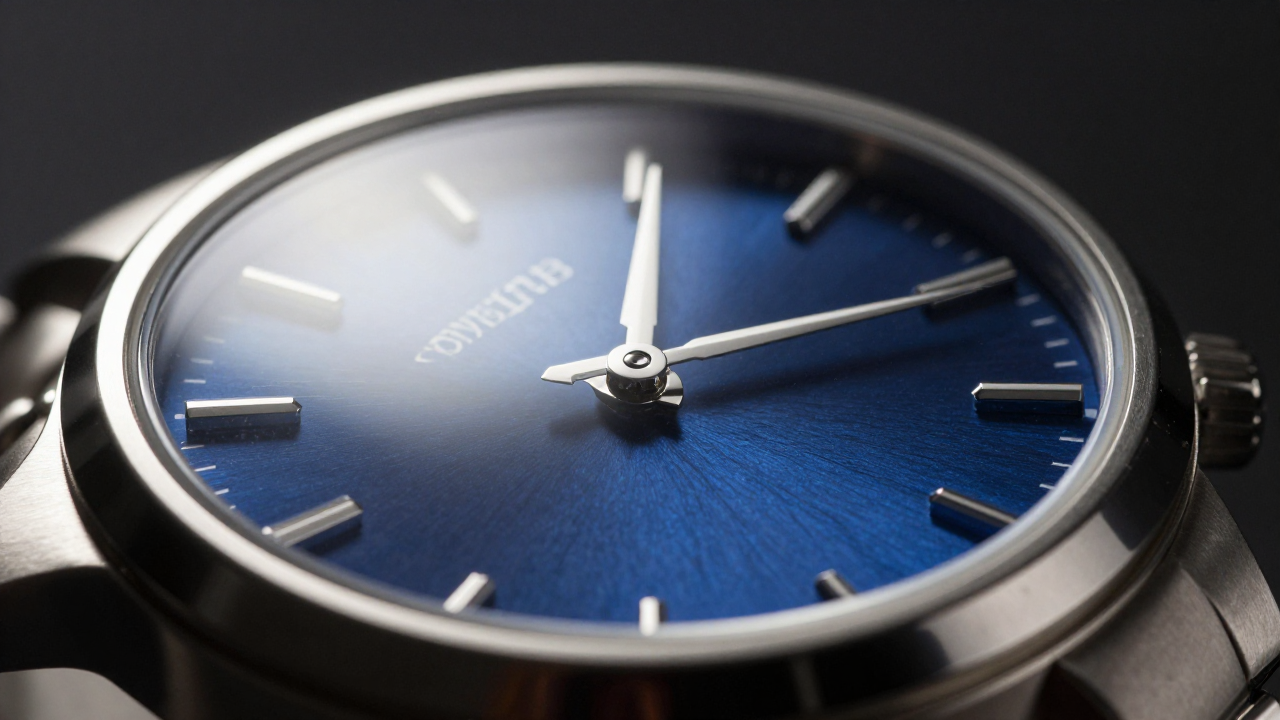
The most common mistake is buying a sapphire watch crystal to a unit-price target instead of to a thickness, coating and tolerance spec. That $0.30 to $0.…
60 per-piece saving comes back as cracked domes, field returns and stopped assembly lines that cost 20 to 60 times more than the saving.
The Most Common Sapphire Watch Crystal Mistake Buyers Make
We've been cutting sapphire in Shenzhen since 2010, and the same six failure modes show up in almost every claim file we open. Not exotic ones. Basic ones, repeated by smart people under deadline pressure.
What follows is the buyer-side version.
What Each Crystal Material Actually Delivers
Sapphire's advantage isn't hardness alone. Monocrystalline aluminum oxide holds a polish indefinitely, so the crystal doesn't haze the way mineral glass does after two years of sleeve contact. That's the part that shows up on a customer's wrist, and the part nobody puts on a spec sheet.
Pitfall 1 — Crystal Thickness Chosen to Hit a Price Target
Thin sapphire breaks. Dropping a 38 mm domed crystal from 1.5 mm to 0.80 mm center thickness cuts blank cost by roughly 40% and cuts impact resistance by more than half. For a domed crystal that sits proud of the bezel, 1.2 mm is the floor and 1.5 mm is normal.
It happens because the cost conversation happens before the mechanical conversation. A program manager gets a target BOM of $6.10 landed, the sapphire line item is the easiest one to squeeze, and the supplier who quotes 0.80 mm wins the award. Nobody models a 3% press-fit crack rate, because crack rates don't appear on a quote.
Here's what that looks like in practice. In June 2020, a smartwatch brand in Irvine, California asked us for a domed crystal at 0.80 mm center thickness. We pushed back once, in writing, and then quoted it because three other suppliers had. 18,000 pieces shipped in September. By November, 3.1% had cracked — not in the field, at the customer's press-fit station in Juárez, Mexico. The press tool was fine. The crystal was flexing under the ram. Rework, replacement air freight and a chargeback landed at $61,400 on a program that saved the buyer about $9,000 across the build.
We took half of that chargeback because we knew better and shipped anyway. It's the single most expensive lesson in our order history, and it's why we now refuse to quote below 1.0 mm on any domed geometry without a signed deviation.
The right approach, and this is a decision rule rather than a number:How Do You Tell Real Sapphire From Sapphire-Coated Glass?
Real sapphire is monocrystalline aluminum oxide all the way through the part. Sapphire-coated glass is mineral glass with a 2–4 µm alumina layer on the surface, and the two are sold under nearly identical language. A refractometer reading of 1.76–1.77, or a density check at 3.98 g/cm³, settles it in under two minutes.
Sales language is where this starts. "Sapphire crystal glass," "sapphire-coated," "sapphire-hard" — none of these are regulated terms in the US, and all three appear on $60 watches. The buyer isn't lying to anyone. They're repeating what their supplier told them.
Consequences bite late. A coated crystal survives the scratch test on day one because the coating is genuinely hard. What fails is the coating's adhesion. Once it lifts, you get a visible halo at the edge of the crystal, and the watch reads as water-damaged to anyone inspecting it.
Three checks that work on a receiving dock:
Ask for boule traceability on any order above 5,000 pieces. Naming the growth method — Kyropoulos, EFG, or heat-exchanger — costs your supplier nothing and tells you whether they know their own supply chain.
Pitfall 3 — Accepting "AR Coated" Without a Reflectance Curve
Bare sapphire reflects about 7.7% of light at each surface, so an uncoated crystal throws away roughly 15% of the dial's light. Double-side broadband coating from 400–700 nm drops total reflection under 1%. Single-side coating lands around 8% — and plenty of suppliers count that as "AR coated."
Buyers compare quotes line by line and see "AR coating: yes" on both, so the cheaper one wins. What's missing is the sides, the wavelength band, and the deposition method.
The consequence is a dial that looks flat and gray under showroom lighting, then hazes further within 6–9 months if the coating is soft. E-beam evaporated magnesium fluoride without ion assistance is the usual culprit. Ion-assisted deposition (IAD) holds up measurably better against the eraser and tape-abrasion tests, though it costs 8–15% more per piece.
Ask for the reflectance curve, not the word. Ask how many sides are coated. Ask which deposition method. A supplier who can answer all three in one email is a supplier worth keeping.
Pitfall 4 — Approving a Batch From a Photo
The pitfall is signing off on a sapphire watch crystal lot from a spec sheet and a phone photo. Three signed witness samples per SKU, retained on both sides, plus a 30-minute incoming inspection, catch about 90% of the defects that turn into field failures.
Witness samples matter more than anyone expects. When a customer calls in month seven, you need a physical reference from the approved lot to prove the crystal changed or didn't. Without one, every dispute becomes a story contest, and the buyer usually loses it.
Two Smaller Ones Worth Thirty Seconds Each
Growth method blindness. EFG-grown sapphire is cheap because it's drawn near-net-shape, and it carries more internal striae and residual stress than Kyropoulos material. Stress shows up months later as edge-origin cracks with no visible impact point. If your claim rate has cracks with no impact mark, ask what growth method your supplier is running. Cleaning with the wrong cloth. Sapphire survives the scouring pad. The AR coating does not. A microfiber cloth and warm water handle 95% of what a watch crystal will ever see. Ammonia-based glass cleaners attack some coating stacks. This one costs nothing to avoid and gets skipped constantly, so it stays on the checklist.Frequently Asked Questions
What is a sapphire watch crystal and why does it cost more?
A sapphire watch crystal is a lens cut from synthetic monocrystalline aluminum oxide, rated 9 on the Mohs scale and about 1,800–2,200 on the Vickers scale. It costs more than mineral glass because growing, slicing, doming and polishing a boule takes days, and blanks run 20 to 40 times the price of glass.
How can I tell if a sapphire watch crystal is real?
Use a refractometer. Synthetic sapphire reads 1.76–1.77 refractive index and 3.98 g/cm³ density. Mineral glass reads about 1.52. A ten-second wrist-contact test works too, since sapphire conducts heat roughly 35 times faster than glass, but only after the watch has equalized to room temperature.
How much should a sapphire watch crystal cost in 2026?
For a 1.2 mm domed crystal, 30–40 mm diameter, double-side AR coated, expect $4.50–$9.00 per piece at 10,000 units, depending on dome depth and coating spec. Below $3.50, verify the material independently. Freight, tariffs and duty typically add 12–22% to landed cost.
How long does a sapphire watch crystal last?
Sapphire itself outlasts the movement, often 20 years or more. The AR coating is the shorter-lived component and commonly shows haze at 5–8 years on low-grade stacks, longer on ion-assisted deposition. Edge chips from drops, not surface wear, end most sapphire crystals early.
How do I choose the right thickness for a watch crystal?
Match thickness to exposure, not to budget. Recessed flat crystals work at 0.80–1.00 mm. Domed or exposed crystals need 1.2 mm minimum and 1.5 mm above 40 mm case diameter. Add 0.10–0.20 mm for titanium, carbon or thin aluminum cases that deflect under impact.
Pre-Purchase Self-Check for Sapphire Watch Crystals
Print that table. Hand it to whoever signs the purchase order. Most of the $61,400 kind of problems die in row two.