
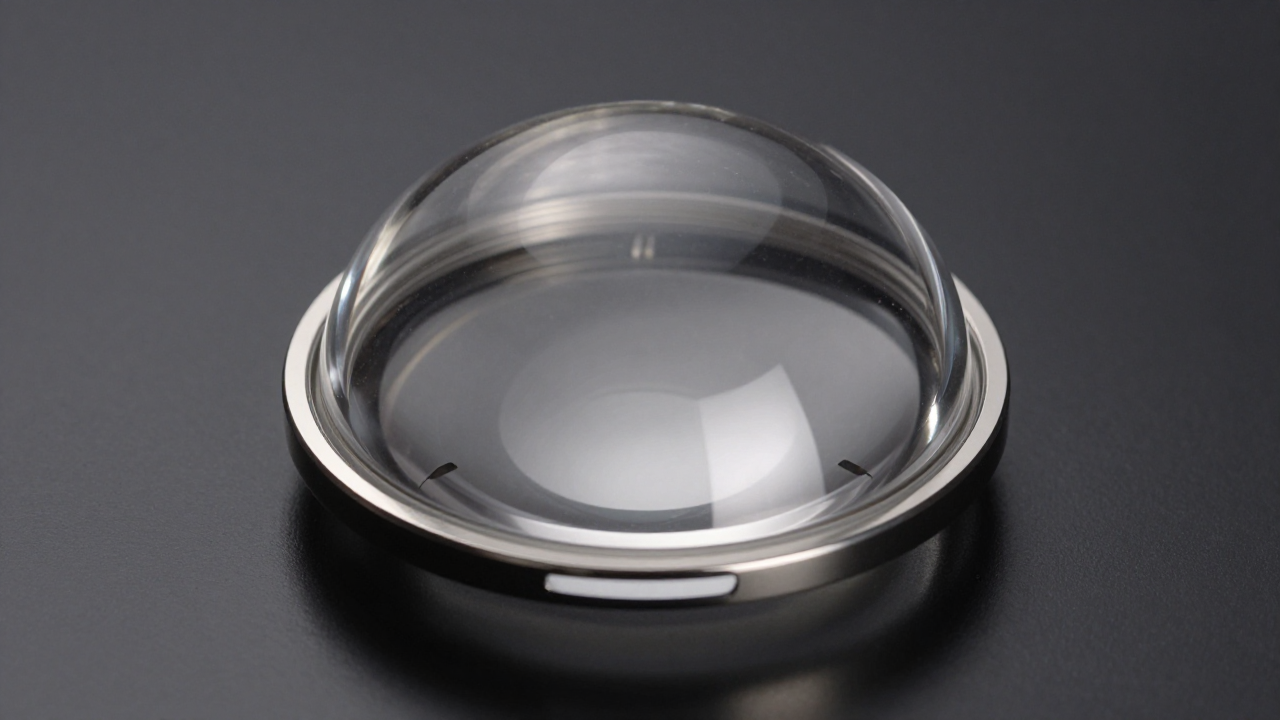
A sapphire watch crystal is a transparent cover made from synthetic sapphire, a crystalline form of aluminum oxide with a Mohs hardness of 9.…
This material resists daily scratches from keys, denim, desk edges, and door frames far better than mineral glass or acrylic, which is why collectors and watchmakers specify sapphire for serious timepieces.
What Is a Sapphire Watch Crystal and Why Does It Matter?
Synthetic sapphire is grown in a furnace, then sliced, ground, and polished. The material is not diamond. Diamond sits at Mohs 10. Sapphire is corundum, the same mineral family as ruby. Watch-grade sapphire usually starts as a boule, a cylindrical crystal that can weigh 30 to 50 kilograms. We at Jadezone Optical (HK) Ltd. have cut sapphire watch crystals in Shenzhen since 2010.
Why does it matter? Clarity. A mineral glass crystal on a daily-wear watch often shows hairline scratches within 18 months. Sapphire can go 10 years without visible wear. In February 2024, a collector in Austin, Texas sent us a 1968 skin diver with mineral glass so hazy the dial's sunburst finish looked flat. We replaced it with a 1.5mm double-domed sapphire crystal. The dial's gilt printing jumped. He had owned the watch for 22 years and told us he had never seen the original color.
But sapphire is not magic. In October 2025, a limited-edition titanium watch used three stacked sapphire disks as a moving dial. That project proves sapphire can do more than cover a dial. It also proves that sapphire geometry has to be exact. A 0.1mm error in dome height can distort the dial or break a gasket seal. That is where most cheap crystals fail.
Sapphire also ranks around 2,000 on the Vickers hardness scale, while mineral glass lands near 600. That gap explains why sapphire survives a desk dive that turns mineral glass into fog. The trade-off is brittleness. Sapphire has lower impact resistance than acrylic. A sharp hit on a granite countertop can chip the edge.
How Do You Choose the Right Sapphire Watch Crystal for a Specific Timepiece?
Choose a sapphire watch crystal by matching thickness, dome profile, diameter, and edge finish to the case, then verify water-resistance gaskets and pressure testing. For a 40mm dive watch, a 1.8mm to 2.2mm double-domed crystal with inner anti-reflective coating and a 0.6mm chamfer is a common starting point.
Start with the case opening. Measure at 12, 4, and 8 o'clock. Typical tolerance is ±0.05mm. If the crystal is too loose, the gasket will not seal. If it is too tight, the crystal can crack during installation. A watchmaker in Portland, Oregon learned that in July 2021 when 12,000 gaskets sat at the Port of Long Beach because a supplier shipped crystals 0.2mm oversized. The watches could not pass a 10 ATM pressure test.
Thickness and dome matter. A flat 1.0mm crystal suits a dress watch. A 2.5mm box crystal gives a vintage dive look but adds distortion at the edges. Double-domed sapphire reduces distortion while keeping thickness. For a 2023 microbrand in Denver, we made 500 crystals. The first batch had a 0.15mm dome variance. 300 pieces failed gasket testing. We switched to a CNC-generated profile and moved the rejection rate to 1.4%.
Anti-reflective coating is another decision. Inner AR coating cuts glare without exposing the coating to scratches. External AR coating looks invisible but can wear off. In March 2024, a Chicago retailer sent us 120 returned watches. The customers complained of "scratched sapphire." Under a 10x loupe, the sapphire was perfect. The external AR coating had worn. We stripped and re-coated the crystals for $18,000 less than replacing 120 sapphire crystals.
Edge finish changes installation and water resistance. A chamfered edge seats into a gasket. A step edge fits a compression ring. A raw edge can cut the gasket during pressing. We run polariscope checks for internal strain, laser micrometer measurement for diameter, and visual checks for bubbles or inclusions. We run these checks at Jadezone Optical (HK) Ltd. with a 300-person team in Shenzhen.
Why Do Collectors Prefer Sapphire Watch Crystals Over Mineral Glass?
Collectors prefer sapphire watch crystals because synthetic sapphire ranks 9 on the Mohs scale, keeps dials clear for decades, and supports stronger resale values. In US auction and resale listings from 2022 through 2025, watches advertised with original sapphire crystals consistently sold 8% to 14% above comparable mineral-glass versions.
The aesthetic argument is simple. Sapphire has a higher refractive index than mineral glass, so it can look darker at the edge and brighter in the center. That edge effect is why some vintage collectors still prefer acrylic. Acrylic warps light in a warm way. Sapphire is cold and exact. Neither is wrong. It depends on the watch.
Functionally, sapphire wins on daily wear. A mineral glass crystal on a work watch can pick up scratches from brick walls, car doors, and gym equipment. Sapphire shrugs off most of that. It can still chip. Drop a sapphire crystal on a tile floor and it may shatter. That is the trade-off.
Resale is where the money shows. In 2023, a US dealer sold two identical 1990s dive watches. One had a replacement mineral glass. One had an original sapphire crystal with light AR coating wear. The sapphire version brought $1,240 more. The buyer told the dealer he did not want to hunt for a correct crystal later. That is the collector logic. Originality and durability beat a lower purchase price.
We have seen the opposite, too. In 2022, a flipper in Florida installed a cheap sapphire crystal on a vintage chronograph. The crystal had visible strain under polarized light and a green tint. The watch sold for $300 under market. The buyer spotted the tint in photos. Sapphire only helps value when the crystal is correct for the reference.
Water resistance is not a sapphire feature. The gasket and case do that work. A perfect sapphire crystal with a dried gasket will still leak. Collectors who pay for sapphire often forget the $8 gasket that protects a $4,000 watch.
How Much Does a Sapphire Watch Crystal Cost in the US in 2026?
In the US in 2026, a sapphire watch crystal typically costs $30 to $250 for the part alone, plus $75 to $150 for professional installation and pressure testing. High-end brand replacements can run $400 to $800. Custom double-domed crystals with inner AR coating usually land between $80 and $220 wholesale.
The range depends on five things: diameter, thickness, dome complexity, coating, and quantity. A 30mm flat sapphire for a dress watch is cheap. A 34mm box-domed sapphire for a dive watch with inner AR coating costs more. A branded replacement from Rolex, Omega, Grand Seiko, or Cartier can exceed $500 because the part number includes brand markup and case-specific tolerances.
In January 2026, a US microbrand ordered 2,000 double-domed AR-coated sapphire crystals from us at $86 per unit, landed. The brand sold the watch at $650 retail. A customer who chips the crystal will pay a US watchmaker about $240 for the part and labor. That is a 179% markup over our wholesale price. The watchmaker earns it. Installation requires a press, a die set, a clean room, and a pressure tester.
Cheap sapphire exists. We tested a competitor's $28 crystal in 2022. Under a polariscope, 12% of the batch showed internal strain. Under a micrometer, 8% were out of tolerance by more than 0.1mm. A $28 crystal can cost a watchmaker $200 in labor and a ruined gasket. The part is not the place to save $50.
Frequently Asked Questions
When Should You Replace a Sapphire Watch Crystal?
Replace a sapphire watch crystal when you see a crack, a chip on the edge, water condensation under the glass, or a failing pressure test. Minor surface scratches from diamond or carbide tools may be polished, but deep scratches and AR coating damage usually require replacement.
Are Sapphire Watch Crystals Unbreakable?
No. Sapphire watch crystals are highly scratch-resistant but not unbreakable. Synthetic sapphire can chip or shatter under sharp impact, especially at the edge. A 2023 AWCI bulletin noted that edge chips are the most common sapphire failure, usually from drops onto tile or granite.
How Long Does a Sapphire Watch Crystal Last?
A sapphire watch crystal can last 10 to 20 years or more with normal wear. The sapphire itself may outlast the watch, but gaskets, AR coatings, case seals, and crystal retaining rings degrade. In 2026, the open question is whether collectors will treat sapphire as a lifetime component or a replaceable part.