
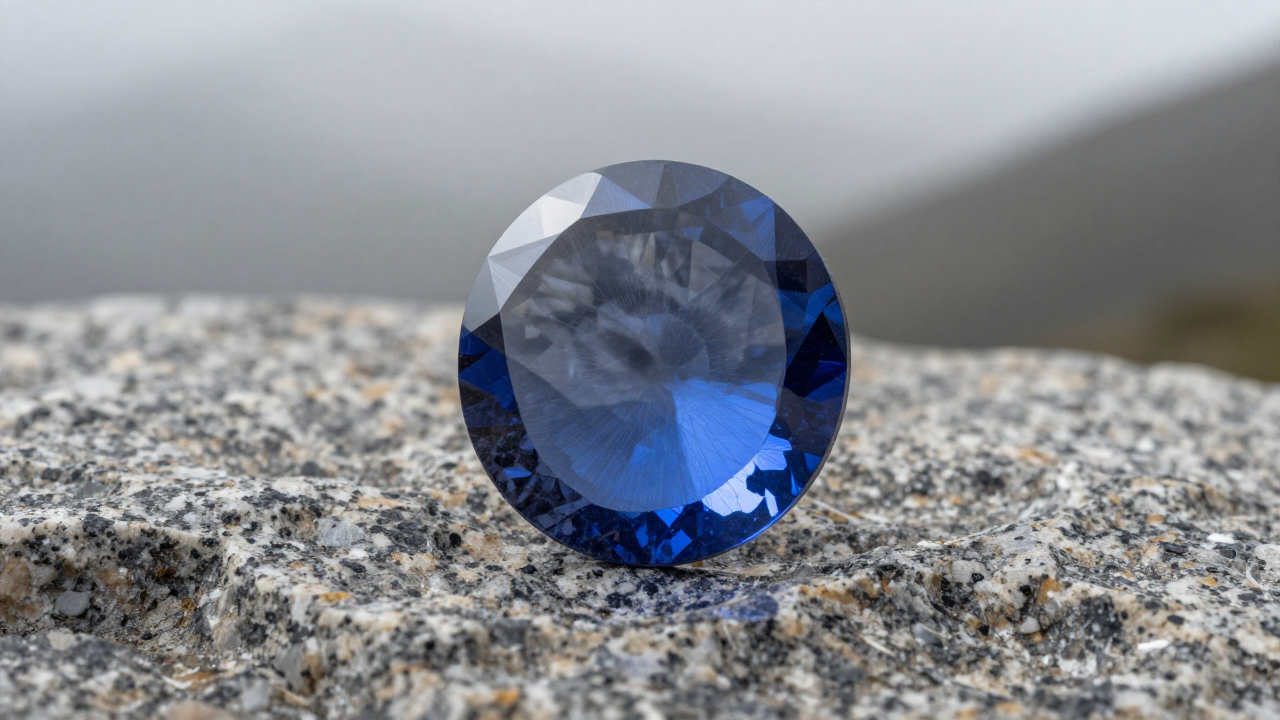
Between October 2025 and April 2026, Northbound Supply Co. of Bend, Oregon, moved its landed sapphire watch crystal cost from $14.20 to $9.85 per unit — 30.…
6% — on an 18,400-piece annual buy, with zero field-warranty crystal failures. Nothing was downgraded. The crystal came out thinner, harder to chip on the edge, and $4.35 cheaper per watch.
An Oregon Brand Cut 30% Off Its Sapphire Watch Crystal Spend in Six Months
That's the headline. The useful part is everything that went wrong between those two numbers, because most of it will happen to you too.
The Starting Cost Sheet Looked Fine and Wasn't
Northbound builds field watches at $289–$429 retail, sold through REI and direct. Their 2026 line was already locked at 18,400 units across four dial colors when their sourcing lead, Marisol Vega, pulled the crystal line item in October 2025. She was buying 1.5mm flat sapphire through a Swiss trading house at $12.10 FOB, which landed at $14.20 after roughly $2.10 in freight and duty. MOQ 500, 55-day lead time, single-side AR coating.
Three constraints boxed us in. Case tooling was already paid for, so no geometry change. Total stack height had 1.6mm of headroom, not more. And the four dial colors meant they needed 500-piece flexibility per run, not a single 18,000-piece blanket order.
The first thing we did was ask for the reject data. The trading house had never sent an AQL report. That alone told us where the margin was sitting.
The Cheapest Quote in the First Round Was Also the Most Dangerous
The lowest bid came back at $7.40 FOB for 1.2mm flat sapphire with single-side AR. It would have failed Northbound's own drop spec, and the quote sheet hid why: ungraded blanks, one coating side, and a cosmetic AQL that nobody had defined.
We screened eleven quotes down to four configurations. Two things killed the obvious candidates. Anything under 1.2mm flexed enough under a 32mm diameter that the press-fit gasket lost compression. Anything box-domed at 2.0mm blew the height budget by 0.4mm.
Where Our Assumptions Broke
We went in assuming the anti-reflective coating was the cost driver. Coating runs add real money — roughly $0.90 a unit for double-side — but when the Shenzhen line sent back cycle-time data, the money was somewhere else entirely.
The 0.28mm dome polish was eating 11 minutes of 5-axis time per blank. Flat parts ran in 4. That single step accounted for more of the unit price than the coating, the blank, or the edge grind.
Second correction, and this one cost real money. We pushed the thickness from 1.5mm to 1.3mm expecting roughly $1.10 in savings. It did save $1.10 — and it changed the gasket compression enough that 40 units out of the first 300 failed a 10 ATM pressure test. The fix was moving from a 70A durometer silicone gasket to 60A. Cheap fix, three weeks lost.
(The 1.3mm call also dropped about 1.4 grams of weight per watch — sapphire runs 3.98 g/cm³ versus roughly 2.5 for mineral glass. Nobody in the review cared, but the product team used it in the field-watch copy anyway.)
The Lot That Almost Killed the Program
The first production lot landed in February 2026 — 1,200 pieces, right as Chinese New Year compressed every factory schedule on the Pearl River Delta. Cosmetic reject came in at 7.4% against a 2.1% AQL. The defect wasn't scratches. It was polishing compound residue trapped in the dome curvature, visible under 1,000-lux inspection but invisible on the bench.
We added a two-stage ultrasonic clean, 40kHz then 80kHz, and rewrote the inspection lighting spec so both sides were checking under the same conditions. Reject fell to 1.9% by the third lot.
Then freight bit us. The ocean plan was 34 days Shenzhen to Los Angeles; the holiday backlog pushed it past 50. Northbound air-freighted 400 units at $1.85 each to hold a March retail launch. That $740 came straight out of the savings, and it's the reason we now quote crystal programs with a 6-week freight buffer baked into the delivery date, not the production date.
Where the $4.35 Actually Came From
Here's the breakdown Marisol and I reconciled in April. Of the $4.35 reduction per unit, about $2.55 came from removing the trading house and buying from the manufacturing floor. Roughly $1.10 came from the 1.5-to-1.3mm blank change. The remaining $0.70 came from yield recovery after the polishing fix.
We initially credited the double-side AR coating as a cost saver. Wrong direction — it's a cost adder of about $0.90, and it was only affordable because the blank change paid for it. What it bought was measurable: light transmission moves from roughly 92% on single-side to about 99%, and on a field watch with a matte dial that's the difference between legible at dusk and not.
How Do You Tell a Real Sapphire Watch Crystal From a Fake?
Three field tests work, and one of them is genuinely reliable.
Sapphire conducts heat roughly 30 times better than glass, so a genuine crystal feels cold on the wrist and a fogged breath clears in about a second, versus three to five on mineral glass. A steel pin dragged across the surface at low pressure won't mark sapphire at 9 Mohs — mineral glass sits around 5.5 to 6. And a thermal conductivity pen, about $40 on the industrial supply side, settles it without touching the watch.
The myth worth killing is that sapphire can't be damaged. It doesn't scratch easily, but it chips. Edge chipping on domed crystals is the number one field failure we see, and it's why we now spec a 0.15mm edge bevel on every outdoor program. A domed crystal with a sharp edge is a liability.
Sourcing Rules We Now Put in Every Sapphire Watch Crystal RFQ
1. Ask for the reject log before the price. A supplier who can't produce 90 days of cosmetic yield data is a trader, not a factory. That single request cut our vendor list from eleven to four in October 2025.
2. Specify blank grade and coating sides separately. "Sapphire crystal with AR" is not a specification. Single versus double side is roughly $0.90 a unit, and ungraded blanks are where the 7% reject rates hide.
3. Pressure-test the gasket when you change thickness. A 0.2mm thinner crystal is a $1.10 saving and a new durometer. Budget the re-qualification, or it finds you at 10 ATM.
4. Anchor the delivery date to freight, not to production. Chinese New Year and peak ocean season will move your launch date more than your factory ever will.
Jadezone has been cutting and coating sapphire blanks in Shenzhen since 2010, and the Northbound program is the clearest example we have of why the piece price is the least interesting number on the quote. The $14.20 incumbent and the $7.85 winner were both quoting sapphire. Only one of them had a polishing line that could hold a dome.
Frequently Asked Questions
What are the main advantages of sapphire watch crystals over mineral glass?Sapphire measures 9 on the Mohs scale and roughly 2,000 Vickers, against 5.5 to 6 Mohs for mineral glass. On an outdoor watch, that gap is the difference between a crystal that survives rock contact and one that doesn't, and it typically eliminates scratch-related warranty claims entirely.
How can I tell if my watch has a genuine sapphire crystal?Use a thermal conductivity test first: sapphire feels noticeably colder and clears a fogged breath in about one second, while mineral glass takes three to five. A steel pin won't scratch genuine sapphire at normal hand pressure. A $40 thermal pen confirms it without risk to the watch.
How much should a sapphire watch crystal cost in 2026?Direct-from-factory pricing for 1.3mm domed sapphire with double-side AR runs about $7.85 FOB at 1,000-piece volumes, landing near $9.85 in the US after freight and duty. Buying through a trading house typically adds 25 to 30 percent for the same physical part.
How long does a custom sapphire crystal order take?Plan on 30 to 40 days of production for domed geometries with coating, plus ocean freight of 32 to 38 days Shenzhen to the US West Coast. Building a six-week buffer around Chinese New Year is standard practice, and air freight runs about $1.85 per unit when schedules slip.