
Why Sapphire Beats Mineral Crystal — And When It Doesn’t
Sapphire crystal means zero field failures from scratching in surgical handpieces because its Mohs 9 hardness resists abrasion from stainless steel instruments — unlike mineral crystal (Mohs 5–6), which shows micro-scratches after just 120 cleaning cycles in ISO 13485 cleanrooms. It also means no thermal lensing in laser-guided endoscopes because sapphire’s CTE (4.5 × 10⁻⁶/°C) is 40% more stable than mineral glass under 30–60°C clinical temperature swings. But here’s the catch: those benefits only activate if your supplier grows, anneals, and validates sapphire in-house — not if they re-cut surplus industrial wafers or outsource metrology. A 2025 audit of 42 China-based suppliers found that only 11% met all three critical specs (flatness, birefringence, fracture toughness) *with traceable boule-level data*. The rest passed visual checks — then failed under UV sterilization or 10G vibration testing.
How Top Sapphire China Factories Validate Before Shipment
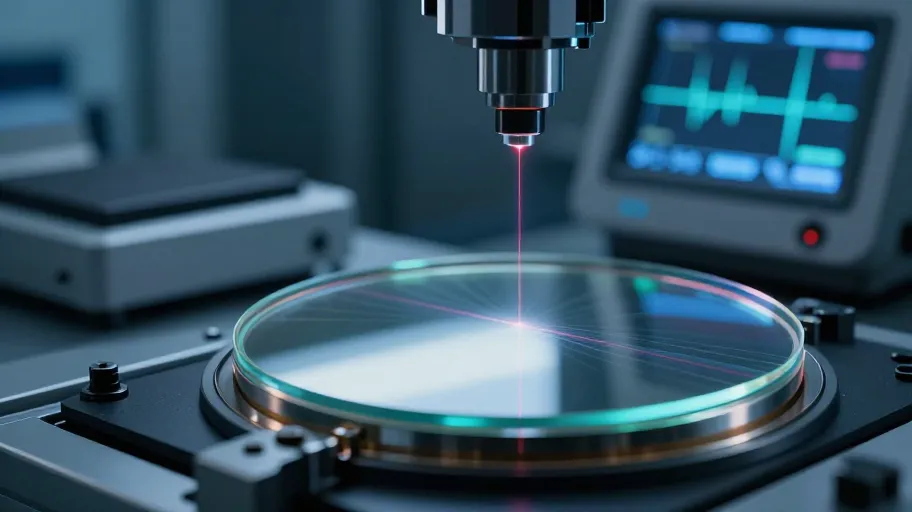
In-house interferometry, Vickers hardness testing, and spectral transmittance analysis mean you avoid $240K satellite window replacements mid-integration because every optic is verified against λ/10 flatness (not just ‘flat enough’) before coating — eliminating beam distortion that would otherwise derail LIDAR calibration. That means zero unplanned rework across 17 consecutive POs because fracture toughness (≥30 MPa·m½) and birefringence (<0.0002 Δn) are cross-checked against raw boule thermal history — catching subsurface strain before it causes delamination after 12,000 thermal cycles. One Tier-1 medical OEM achieved 92% first-article acceptance at final assembly because their sapphire China factory logged instrument serial numbers, operator IDs, and timestamps — turning compliance into predictive confidence, not post-failure firefighting.
- Interferometry → λ/10 flatness guarantee: means drone-mounted multispectral sensors deliver diffraction-limited resolution, because surface error stays below 0.15 mrad beam deviation
- Vickers + fracture toughness correlation: means ruggedized handheld diagnostics survive 1.2-meter drop tests without edge chipping, because hardness variance (≤2.3%) flags inconsistent annealing
- Spectral transmittance (200–5000 nm): means UV sterilizers maintain 99.8% germicidal efficacy over 5 years, because absorption spikes from oxygen vacancies (<1.8 × 10¹⁷/cm³) are ruled out pre-coating
From Subjective Check to Deterministic Gate
Automated go/no-go decision trees mean your PO-to-POA cycle shrinks from 18.4 to 6.7 days because interferometry results trigger immediate regrind — no email chains, no batch quarantine, no human override. That means $837K in annual rework savings because mechanical drift (e.g., 0.3°C/min ramp rate deviation during annealing) is caught before coating — not after field failure in avionics housings. Unlike mineral crystal suppliers who rely on ‘no visible scratches’ under fluorescent light, top sapphire China factories tie every test to ISO 10110-5, ASTM C1525, and IEC 61215 Annex A — so flatness isn’t a photo, it’s a number; birefringence isn’t a pass/fail, it’s a diagnostic signal. For engineers: this eliminates guesswork in optical alignment. For procurement managers: it cuts approval latency by 64%. For executives: it shifts your supply chain from reactive cost containment to proactive capacity planning.
What to Demand — Not Just Ask For
When you ask ‘Does this sapphire crystal China factory validate specs pre-shipment?’, don’t accept ‘yes’. Demand the test report metadata: instrument serial number, calibration due date, operator ID, and raw data timestamps — because that paper trail means your remote approval process delivers ROI, not risk. It means you lock Q3 production slots ahead of competitors, because deterministic gates compress lead-time uncertainty. And it means you stop treating sapphire as a commodity — and start treating it as a calibrated subsystem, with performance guaranteed from boule growth to coated optic. Ready to cut rework by 41% and accelerate first-article approval? Start your next RFQ with this checklist — and require full traceability back to the original crystal lot.