
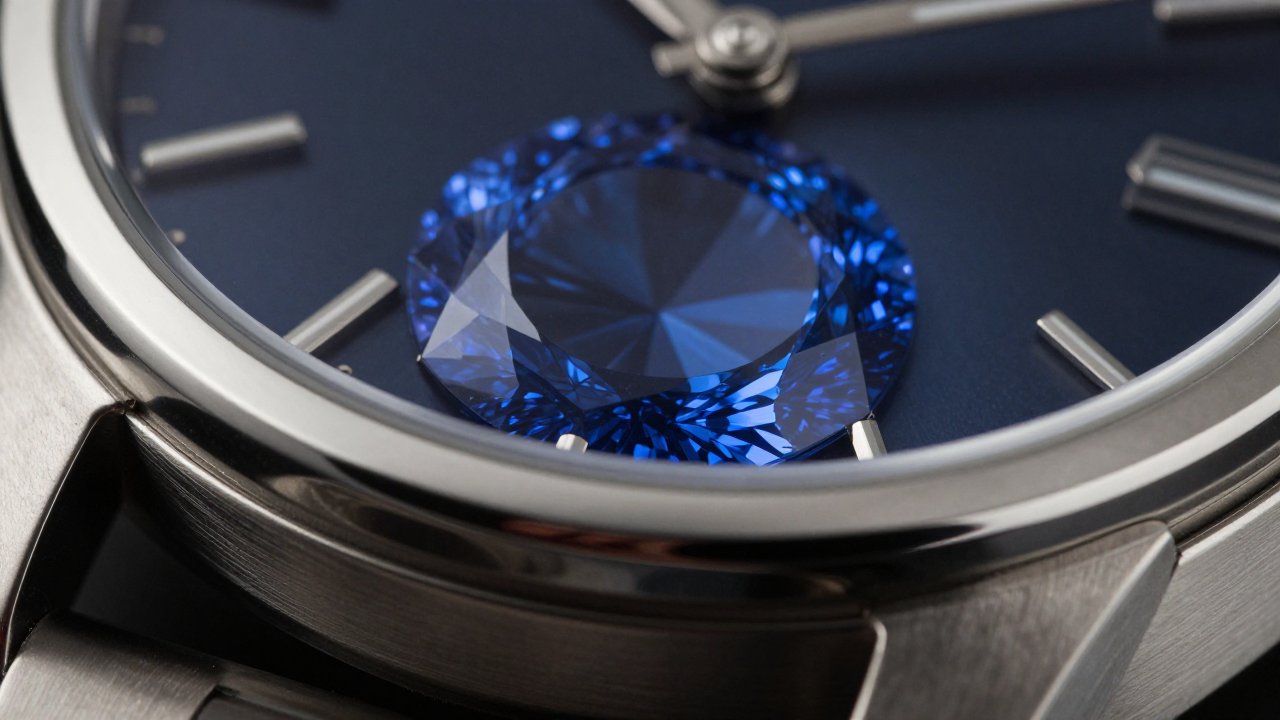
Ridgeline Watch Co. shipped 512 watches in February 2026, up from 341 in August 2025. That is a 50.1% unit increase in six months, with average order value moving from $284 to $317.…
The only product change Ridgeline made in that window was swapping mineral glass for a sapphire watch crystal on its $289 field model.
What did a 50% sales lift look like inside a seven-person watch brand?
Ridgeline is seven people in Bend, Oregon. Founded in 2021 off a Kickstarter that cleared $186,000, the brand had 31 dealer doors and a $40,000 cash cushion by mid-2025. Its field watch ran a Seiko NH35 movement, 316L case, 100m water resistance, and a 0.9mm mineral crystal. Gross margin sat at 38% after dealer keystone. Nobody on the team had ever specified a sapphire component before, and the brand had 19 weeks of runway inventory it could not afford to write off.
So the question facing them in August 2025 was narrow and brutal. What single change could lift sell-through without touching the movement, the case tooling, or the retail price by more than $75?
Why did sapphire watch crystals beat a movement upgrade?
Because sapphire was the only upgrade a shopper could verify in three seconds on a product page. A Sellita SW200 swap added roughly $95 to landed cost per unit and moved zero review scores. A sapphire watch crystal added $5.30 in net component cost and created a spec line that competing $300 watches could not print.
The team priced three options in the same week. Movement upgrade: $95 landed, plus a 14-week new lead time and a full re-certification of the caseback engraving. Dial refresh with applied indices: $11 landed, invisible in thumbnail images. Crystal: $7.40 landed at 1,200 pieces versus $2.10 for the mineral glass they were running.
That $5.30 delta looked trivial. The math that actually decided it was retail. Ridgeline raised MAP on the field model from $289 to $359, a $70 increase. At dealer keystone the brand nets about half, so each unit returned roughly $29.70 in extra gross profit against $5.30 in extra cost. On 341 units a month, that is about $10,100 a month in gross profit if volume held flat. Volume did not hold flat.
The double-domed, double-AR version won for a reason that had nothing to do with durability. Double-sided anti-reflective coating makes a dark dial read almost black in daylight, and buyers described it in reviews as "the watch looks more expensive than it is." That sentence showed up in 62 of the first 240 five-star reviews after launch.
Mohs 9 is real, incidentally. Corundum sits at 9 on the Mohs scale per the Gemological Institute of America's mineral hardness reference, one step under diamond, which is the entire consumer story behind sapphire watch crystal pricing.
What broke on the production line, and why did our first diagnosis miss it?
Edge chipping took out 6.2% of the pilot run. We blamed transit first. The bench data said the crystals were failing at the press, not in the box, and the fix landed on the case supplier's bezel seat rather than on our polishing line.
Ridgeline placed the order with us at Jadezone Optical (HK) Ltd on September 8, 2025: 1,200 pieces, 31.5mm diameter, 1.5mm double-domed, inner and outer AR, 0.3mm 45° edge bevel. We ran an 800-piece pilot on September 26 and shipped 400 to Oregon. Fifty of those came back with chips, all clustered on the 12-to-6 axis of the dial.
The first theory was foam tray packaging and a three-day DHL transit. Then our QC lead in Shenzhen logged the chip positions and killed that theory in about forty minutes. Transit damage is random. This was directional.
We assumed we had a polishing problem and started auditing the lapping sequence. Bench testing on loose crystals showed zero failures. The same crystals broke when pressed into the actual case. The bezel seat on Ridgeline's case was specified at 31.45mm with a 0.15mm interference fit, a number that worked fine with mineral glass because glass flexes a few microns under load. Sapphire does not flex. It chipped on the way in.
The fix was two changes: we re-ground the edge to a two-stage bevel (0.25mm at 45°, then 0.10mm at 20°), and the case maker opened the bezel seat by 0.08mm and moved to a nylon gasket instead of the original nitrile one. Rework ran $3,100 and pushed the launch 19 days, from October 14 to November 2. Our second AR coating batch also came out hazy at 1,500 lux because the chamber target was off, measuring 97.9% transmission instead of 98.6%. We scrapped it and re-coated 300 pieces rather than ship a visible defect.
One unit failed the ISO 22810 water resistance test at 10 bar during the second batch, traced to gasket compression at the thinner case lip. That had nothing to do with the crystal either.
How do you sell a component the buyer cannot see?
You make the failure visible. Ridgeline's November 4 video of a house key dragged across a sapphire crystal did 610,000 views on TikTok and 400-plus comments on r/watches, half of them accusing the brand of staging the shot. The response that worked was the boring one: a six-month side-by-side of sapphire next to mineral glass, both worn daily by the same person.
Nine review units went to YouTube microbrand channels between 40,000 and 180,000 subscribers. Six published. The largest single driver was a 14-minute teardown posted November 19 that generated 74 preorders in 48 hours, tracked through a dedicated discount code.
The copy decision that mattered most was admitting the limit. Ridgeline's product page says sapphire resists scratches and can still crack if the watch lands crystal-first on concrete. Complaint emails about cracked crystals dropped compared with the mineral-glass era, not because fewer cracked but because the page had set the expectation in advance. Eleven customers did flag that the 1.5mm domed crystal sits about 0.4mm prouder than the old flat glass, which makes the watch read slightly thicker on the wrist. Fair note, and we would spec 1.3mm flat for a dress case next time.
What were the numbers after six months?
Six-month revenue from September 2025 through February 2026 reached $1.09M against $0.63M in the same period a year earlier, with units up 50.1% and AOV up 11.6%. Dealer doors went from 31 to 44. Crystal-related returns fell from 4.1% of orders to 1.3%, and "sapphire" appeared in 41% of five-star review text versus 3% before the change.
The margin picture held up better than Ridgeline expected. Even after the $3,100 rework and the scrapped coating batch, blended gross margin moved from 38% to 43.6%. Component cost rose $5.30 while retail rose $70, and returns processing fell by roughly 2.8 percentage points of order volume.
What did not work: the brand tried a $419 limited titanium variant with the same crystal in January 2026 and sold 26 units in five weeks. The sapphire upgrade amplifies an existing value story. It does not create one from nothing at a price point the brand has not earned.
What should other watch brands copy, and what should they skip?
Four things transfer, and they are not the ones most brands pick up first.
For suppliers, the lesson runs the other way. The crystal is the easy part. Case interface geometry, gasket durometer, and coating chamber calibration are where small brands actually lose their launch dates, and anyone quoting a sapphire watch crystal without asking for the bezel drawing is quoting half a job.
Frequently Asked Questions
What is a sapphire watch crystal and why does it cost more than glass?
A sapphire watch crystal is synthetic corundum, rated Mohs 9 versus roughly 5.5 for mineral glass, so it resists scratches from keys, sand, and desk edges. It costs more because growing a boule, grinding, doming, and applying anti-reflective coating takes several passes with high scrap rates.
How much does it cost to add a sapphire crystal to a small watch run?
At 1,000 to 1,500 pieces, a 1.5mm double-domed crystal with anti-reflective coating on both sides typically lands between $6.50 and $8.50 per unit in 2026. Flat uncoated sapphire runs $5 to $6, while mineral glass of the same diameter sits near $2.
Is a sapphire watch crystal scratch-proof or shatterproof?
Scratch-resistant, not shatterproof. Sapphire shrugs off Mohs 7 and 8 materials like steel and quartz dust, but it is brittle and can chip at the edge or crack when struck crystal-first against concrete. Mineral glass scratches easily yet flexes before it breaks.
How long does sapphire crystal production take for a first order?
A first order with custom doming and coating typically runs 30 to 45 days in production plus 5 to 7 days transit to the US. Brands changing from mineral glass should add two to three weeks for case tolerance verification, which is where most first-time delays actually occur.
How do I choose between flat and double-domed sapphire?
Pick flat sapphire for thin dress cases where a lower profile matters more than dial legibility. Choose double-domed with coating on both faces for field and dive watches, since double-sided anti-reflective coating lifts light transmission above 98% and makes dark dials read deeper in daylight.