
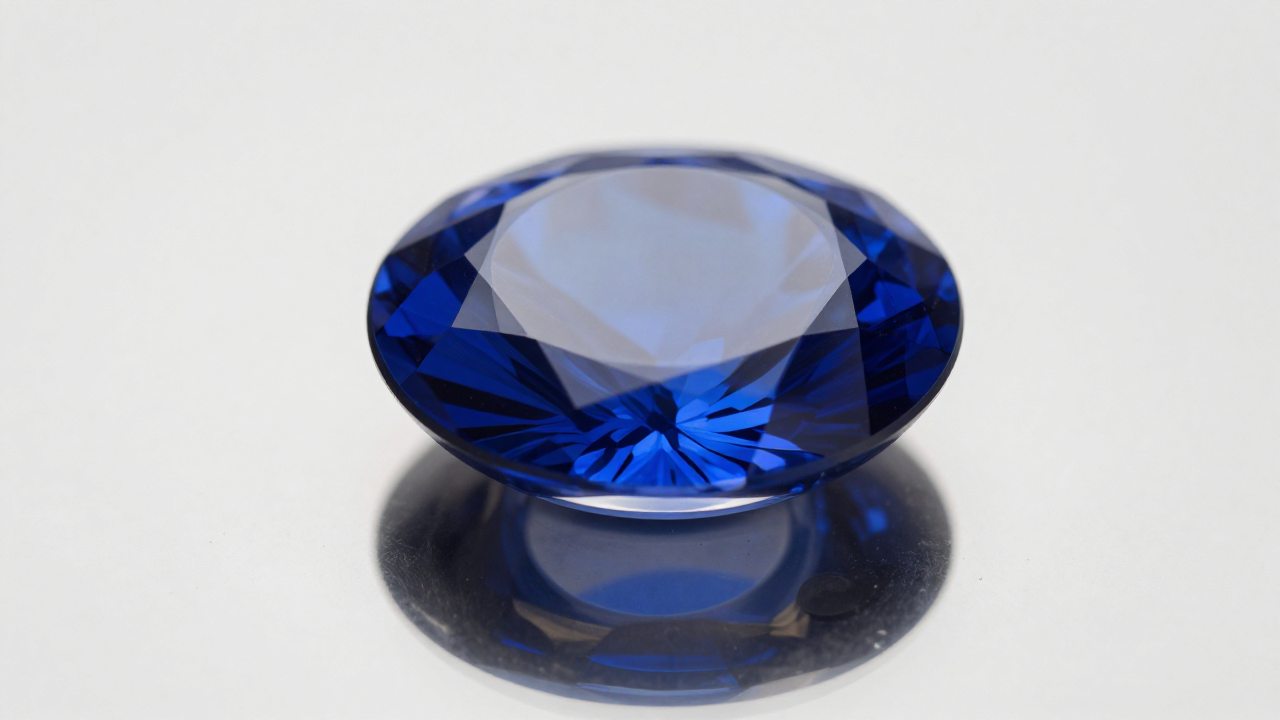
A sapphire watch crystal typically costs $150 to $300 installed in the US, with a 2-3 year payback for watches that replace mineral glass every 8 to 14 months.…
For low-wear dress watches, the upgrade often takes more than 6 years to break even.
The Real Cost of a Sapphire Watch Crystal Starts Above the Invoice
The invoice line for the part is not the full cost. The total cost includes the part, labor, gasket, pressure test, return risk, and the resale value of the watch after the swap. Sapphire is a crystal, specifically single-crystal aluminum oxide, not a glass. It ranks 9 on the Mohs scale, while mineral glass sits near 5.5. This hardness gap is real but does not automatically produce a positive return.
Where Sapphire Watch Crystal Budgets Break
Visible parts and labor account for roughly 55-65% of the three-year cost of a sapphire watch crystal; hidden service, rework, and downtime add $90-$180 per unit. This gap can flip a forecast from positive to negative.
Pressure testing to ISO 22810:2010 costs $15-$30 per service at most US shops. This line item rarely shows up in a crystal quote, yet it is necessary every time the case is opened.
In September 2022, a Portland, Oregon microbrand shipped 1,200 field watches with a 1.3 mm sapphire crystal and a new 0.4 mm bezel chamfer. The first 300 units went out in October. By December, 46 units came back with edge chips. The service team traced the failures to a 0.05 mm gap between the crystal and the bezel seat. Rework cost $38 per unit in labor and parts, plus $11 in return freight. Total cost was $2,254 on 46 units, or 4.9% of that batch's revenue. The forecast had assumed a 0.5% defect rate. The data set is small, so treat 4.9% as a warning, not a benchmark.
At Jadezone Optical (HK) Ltd., we have produced sapphire crystals in Shenzhen since 2010, and our 2024 production audit of 4,800 units showed the same pattern: edge chamfer and adhesive cure are the two line items most often missing from a buyer's quote. A 0.2 mm chamfer change can add $2 to the part cost and remove $30 or more from field rework. This trade is usually worth taking.
How to Calculate ROI on a Sapphire Crystal
ROI = ((Annual replacement cost avoided × Years) + Resale premium - Installed sapphire cost - (Added annual care × Years)) / Installed sapphire cost × 100. A high-wear watch that replaces mineral glass every 8 months at $75 produces a 72% four-year ROI on a $240 sapphire install; a dress watch that replaces glass every 24 months produces a negative return.
Use the replacement cycle you actually follow, not the cycle in a brochure. Example: a US buyer replaces mineral glass every 8 months at $75, which is $112.50 per year. Over four years, that is $450. The installed cost for sapphire is $240. Added annual care is $18 for gasket and pressure test, or $72 over four years. Resale premium is $35. Net benefit = $450 + $35 - $240 - $72 = $173. ROI = $173 / $240 × 100 = 72%. Payback = $240 / ($112.50 - $18) = 2.54 years.
I wrote earlier that payback is 2-3 years; this applies to high-wear watches, not every watch. If the same buyer replaces mineral glass every 24 months at $70, annual replacement cost is $35. Over four years, avoided cost is $140. Net benefit = $140 + $35 - $240 - $72 = -$137. ROI = -57%. The sapphire crystal loses money in that scenario.
Most cost models get three things wrong. They use the retail price of the watch instead of the loaded installed cost. They ignore anti-reflective coating wear, which often shows up in 2 to 4 years. They compare sapphire to a perfect mineral crystal instead of the scratched, replaced mineral crystal the owner actually lives with. (The $199 retail upgrade price is not the cost; it is the price.)
Is a Sapphire Crystal Worth It for a $300 Watch?
No, not usually. A $300 watch rarely carries enough resale premium or replacement frequency to justify a $150-$300 sapphire crystal. The upgrade makes financial sense when annual mineral replacement cost exceeds $75 or the watch is kept beyond four years.
Skip sapphire if the watch resale value is below $400, if annual mineral replacement is under $40, if the case has a thin bezel with no chamfer, or if you flip watches every 12 months. These conditions are common in fashion watches and low-volume microbrands. Mineral glass at $30-$60 installed, K1 hardened glass at $50-$90, or acrylic at $20-$40 can be the rational choice. Sapphire is a durability tool, not a default upgrade.
The 2023 Rollout That Turned a 34% ROI Forecast Into a Loss
In June 2023, a 19-store repair chain in the US Midwest forecast a 34% two-year ROI on sapphire crystals and booked a $61,000 loss by December. The forecast used part cost and labor, but missed installation rework, pressure-test labor, and customer returns.
The chain bought 6,200 crystals at $48 average and sold the upgrade at $199 installed. It assumed a 1.5% installation failure rate. Actual failure was 5.8% because technicians used the same press cup and torque as mineral glass. Rework cost $36 per unit, return freight $12, and customer credit $30. 360 failures × $78 = $28,080. Training was $12,400, excess freight was $9,800, and extra pressure tests added $10,850. Total loss: $61,130.
The fix was not a new supplier. The chain ran a 30-unit pilot, changed the press cup, set torque to 0.6 Nm, and added a 24-hour cure check. Failure dropped under 2% by March 2024. Any buyer scaling a sapphire crystal program should demand that pilot data before signing a 5,000-unit PO.
What We Tell Buyers Before They Approve the PO
Run a 30-unit pilot, specify edge chamfer and adhesive cure, and track returns for 90 days before scaling. These controls cut installation failure from 5-6% to under 2% in our customer audits since 2021.
Ask for the installed cost, not the crystal price. Ask who pays for pressure testing after battery service. Ask what happens to the AR coating after 24 months. Ask for the return rate on the exact case model. The answers matter more than the Mohs rating. A sapphire crystal that chips at the bezel is more expensive than a mineral glass that scratches.
Frequently Asked Questions
How much does a sapphire crystal replacement cost?
A sapphire crystal replacement costs $150 to $300 installed in the US in 2026. The crystal blank runs $45 to $120, and watchmaker labor runs $60 to $140. Anti-reflective coating, unusual sizes, and pressure testing can push the total above $400.
How long does a sapphire crystal last?
A sapphire crystal typically lasts 5 to 10 years before impact damage or gasket failure forces replacement. The anti-reflective coating often shows wear in 2 to 4 years. Water resistance depends on the gasket and case, not the sapphire alone.
Is a sapphire crystal worth the cost?
A sapphire crystal is worth the cost when mineral glass is replaced every 8 to 14 months at $60 or more, or when the watch is kept beyond four years. It is usually not worth it for low-wear dress watches under $400 resale value.
What hidden costs do watch owners miss?
The hidden costs include gasket replacement, pressure testing, anti-reflective coating wear, installation rework, return freight, and downtime. These items add $90 to $180 over three years. Most quotes show only the crystal blank and installation labor.