';

NEWS CENTER

Pioneer and leader in the same industry

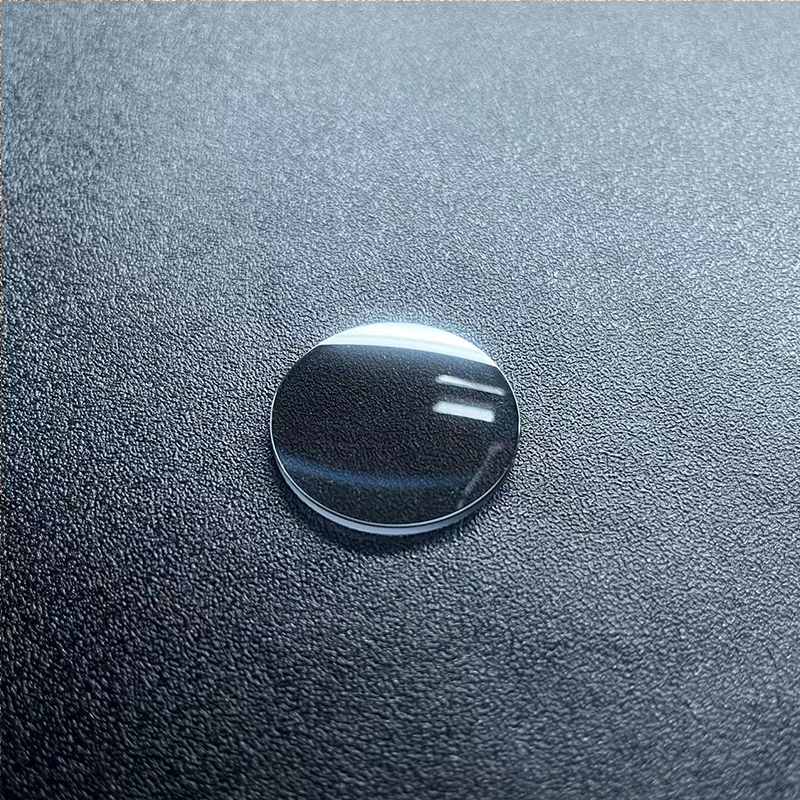
Selecting the correct crystal profile is a foundational decision in watch development that balances structural integrity, water resistance, and visual hierarchy. For sourcing managers and designers, the choice between flat, box-type, and domed sapphire watch glass types comes down to the Geometry-Utility-Ratio (GUR): analyzing how the curvature impacts internal clearance, sealing surface area, and perceived dial depth. While flat profiles offer maximum manufacturing ease and superior lateral impact resistance, domed geometries enhance dial legibility through magnification but require precise vertical clearance calculations. Box-type crystals offer a specific retro aesthetic without the magnification of a full dome, yet they demand distinct case assembly techniques. Understanding these trade-offs is critical for minimizing tooling revisions and ensuring the final product meets both aesthetic and performance standards.
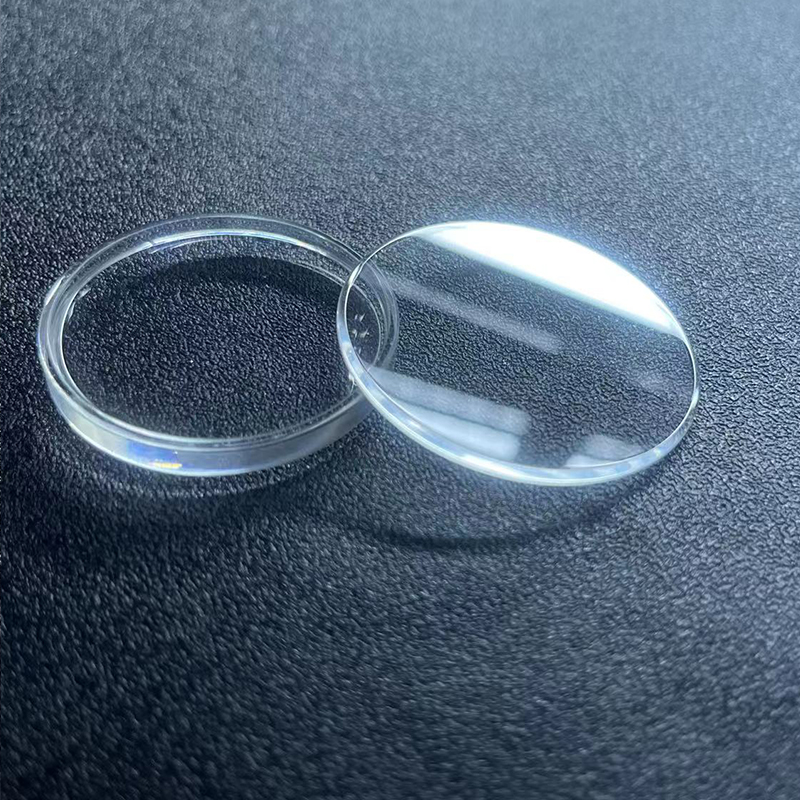
To receive an accurate and actionable price from a sapphire watch glass supplier, you must provide more than just a sketch or a photo. You need a comprehensive technical package that defines the geometry, material properties, surface treatments, and volume requirements. Without these specific details, any supplier is forced to estimate, leading to price volatility and potential production delays. By preparing a precise technical brief, you enable the engineering team to assess feasibility, tooling needs, and material utilization correctly.

Achieving a perfect seal in a timepiece relies less on the sapphire's clarity and more on the invisible mathematics of sapphire crystal tolerance watch engineering. If the outer diameter (OD) of the crystal lacks the necessary clearance relative to the case recess, or if the tolerance stack-up is miscalculated against the gasket's compression rate, the result is inevitable water ingress or structural stress on the case. For sourcing managers and engineers, the priority is to define a dimensional window that allows for secure assembly without compromising the water-resistance rating of the final product.

For watch designers and sourcing managers, the choice between single-domed and double-domed sapphire comes down to a trade-off between visual depth and spatial economy. A single-domed crystal curves only on the exterior, offering a sleek, low-profile aesthetic, while a double-domed crystal curves on both sides, providing greater volume and a pronounced "vintage" magnification effect that requires significantly more case height.

You might assume all sapphire parts come from the same crystal, so any factory can produce them. That assumption costs people real money. The difference is process control.…

Choosing between single-domed and double-domed sapphire crystals isn't just about looks—it's a make-or-break decision for durability and optical performance. One wrong choice can cost more than money. We break down why geometry matters, where it fails, and how leading manufacturers avoid costly mistakes.

Getting a precise quote for sapphire watch glass from China starts with what you share—not what you assume. Missing specs mean higher costs, delays, and broken batches.

Chinese-made sapphire watch crystals now achieve sub-5-micron tolerance, ensuring perfect gasket seals and long-term water resistance. This isn’t just manufacturing—it’s engineering trust into every timepiece.

In March 2022, Jason R. from Portland, Oregon wired $37,500 to a supplier he found on Alibaba. The listing branded the operation as a Sapphire China Factory with 15 years of production history.…

China dominates global sapphire crystal production, delivering 10x scratch resistance over glass. This isn’t just about durability—it’s about keeping devices alive in deserts, mines, and hospitals.
  • Real-world performance gains
  • Hidden cost savings
  • What sets top-tier sapphire china factory output apart