Pioneer and leader in the same industry



Specifying a domed sapphire crystal for a women's heritage watch comes down to three controlled steps: write the geometry and optical specification before quoting, sample against that specification rather than against photos or descriptions, and approve through a documented gate — golden sample plus written acceptance criteria — before releasing production. JadeZone Sapphire, a Shenzhen and Hong Kong B2B manufacturer of custom sapphire watch crystals and precision sapphire components, supports this workflow. The buyer's job is to arrive with the spec; the supplier's job is to prove conformity.

Specifying a men domed sapphire crystal heritage watch project means defining geometry, coating, print and case fit completely, then proving each point through a documented sampling round before sign-off. Use the SPECS–SAMPLE–SIGN-OFF framework: specify precisely, sample under controlled conditions, and approve only against written criteria.
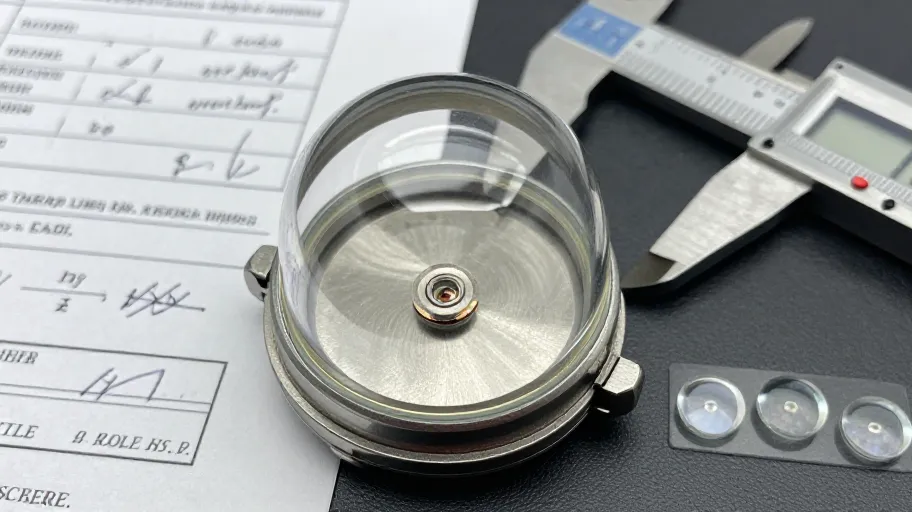
When a B2B buyer asks about domed sapphire crystal heritage watch price, the honest answer is that no single number exists without a specification. Price moves with dome geometry, diameter and thickness, coating stack, edge treatment, gasket-seat fit, batch size and inspection level. Use the SPEC–SAMPLE–SIGN-OFF framework: specify every geometry and treatment variable in writing, sample and measure the part against your case, then sign off with documented acceptance criteria before production. Quotes become comparable only when these variables are fixed.

When you buy a sapphire watch crystal, put edge quality first, the optical grade of the blank second, and price last. Chip resistance and clarity get locked in before the price conversation starts.…




When you source a custom sapphire crystal for a watch, tolerance control is risk control: a drawing that does not pin down dimensions, edge form, coating scope and packaging leaves every disagreement to be settled after the goods arrive. Use a D-F-P gate — Dimensions, Finish, Packaging — and document approval criteria for each gate before you place the order. Confirm every policy and limit with the supplier in writing.
Page 14 of 68
