Pioneer and leader in the same industry


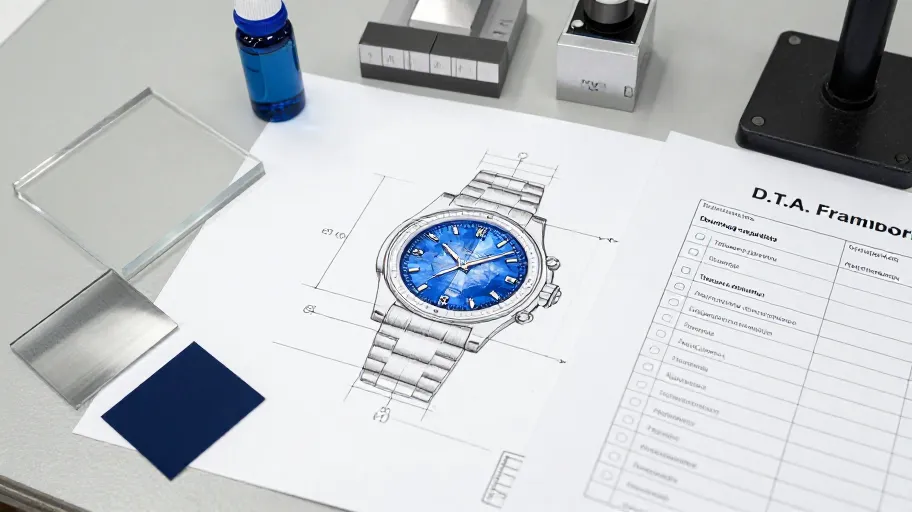
To get an accurate quote for a sapphire crystal tolerance project, your supplier needs a complete drawing with defined dimensional callouts, material and finish specifications, coating requirements, reference standards for inspection, and stated acceptance criteria. Before quoting, apply the D.T.A. Framework: Drawing completeness, Tolerance definition, Approval evidence. Anything missing becomes a risk transferred to you.

Specifying an anti reflective sapphire crystal coating means making three linked decisions — how many layers, applied to which faces, and verified by which acceptance tests — then writing all three into your RFQ so every supplier quotes the same thing. The coating is a system, not an add-on: layer count changes reflectance and colour balance, application side changes legibility from different viewing angles, and undefined test methods make quotes impossible to compare.

Before you sign off on domed sapphire watch glass, keep four pieces of evidence on file: a curvature drawing referenced to your case geometry, dimensional inspection reports from actual production lots, coating verification documentation, and a written agreement on what happens when a part falls outside agreed tolerances. Without these, approval rests on trust rather than traceable proof.

Halden Horology cut its landed sapphire watch crystal cost from $58.20 to $40.60 per unit — a 30.…




In watch sourcing, "sapphire glass" and "sapphire crystal" refer to the same material category: a synthetic sapphire part used as the transparent cover over a watch dial. The vocabulary matters less than the specification behind it. What separates a smooth procurement from a disputed one is whether the buyer documents dimensions, coatings, edge geometry and acceptance criteria before samples are approved. This guide gives you a framework for that documentation.
Page 8 of 50
